
Description
Product Description
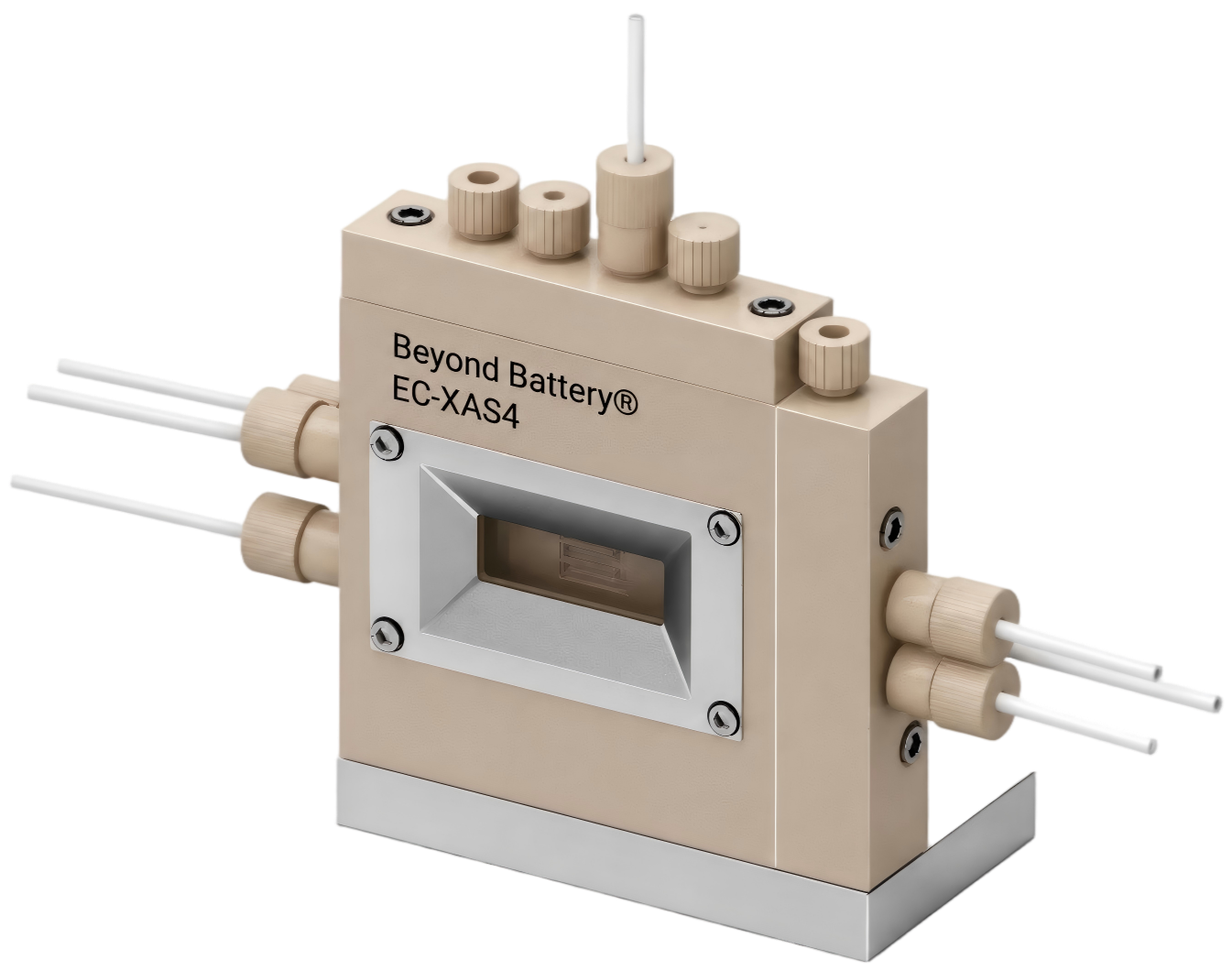
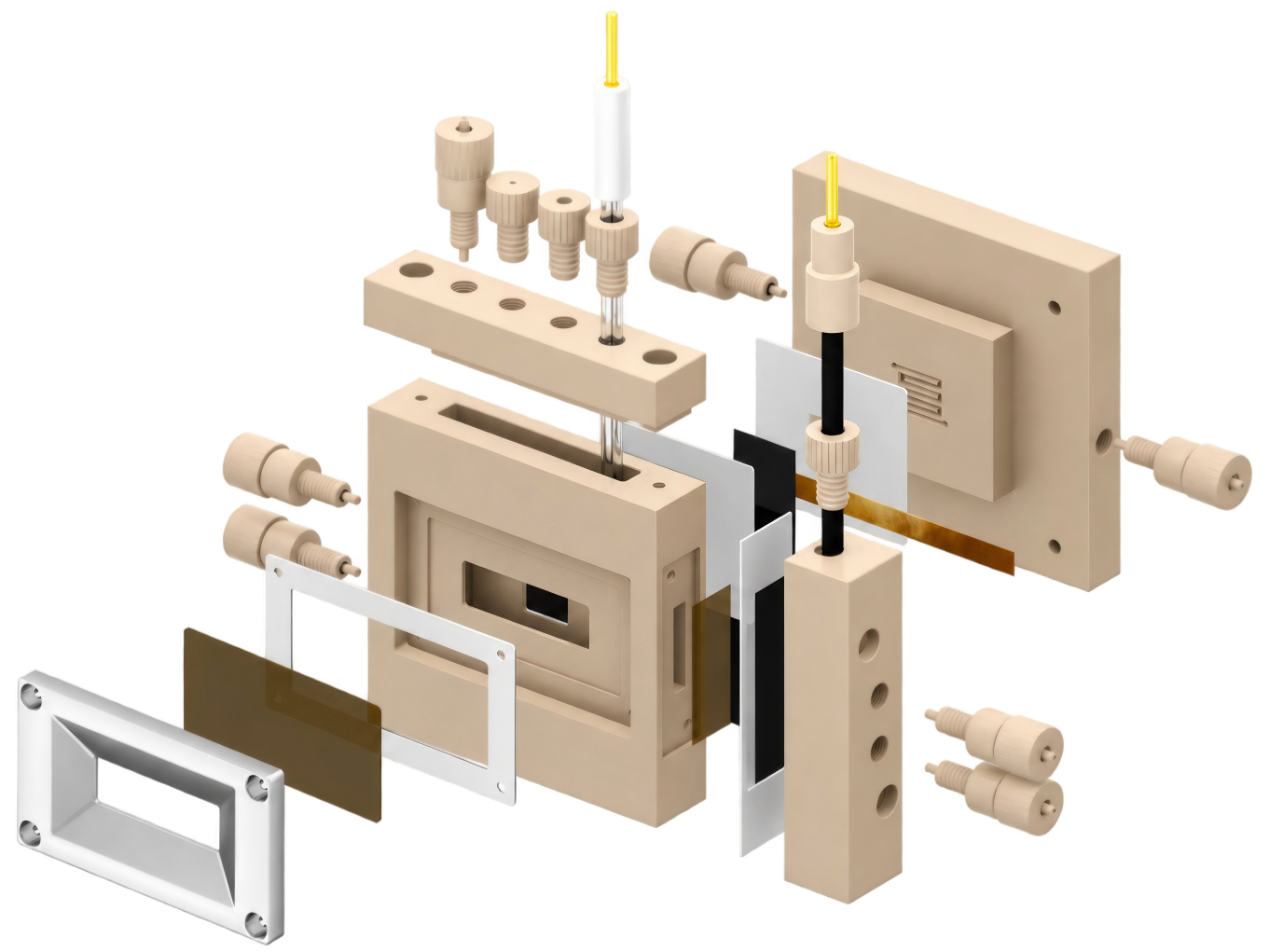
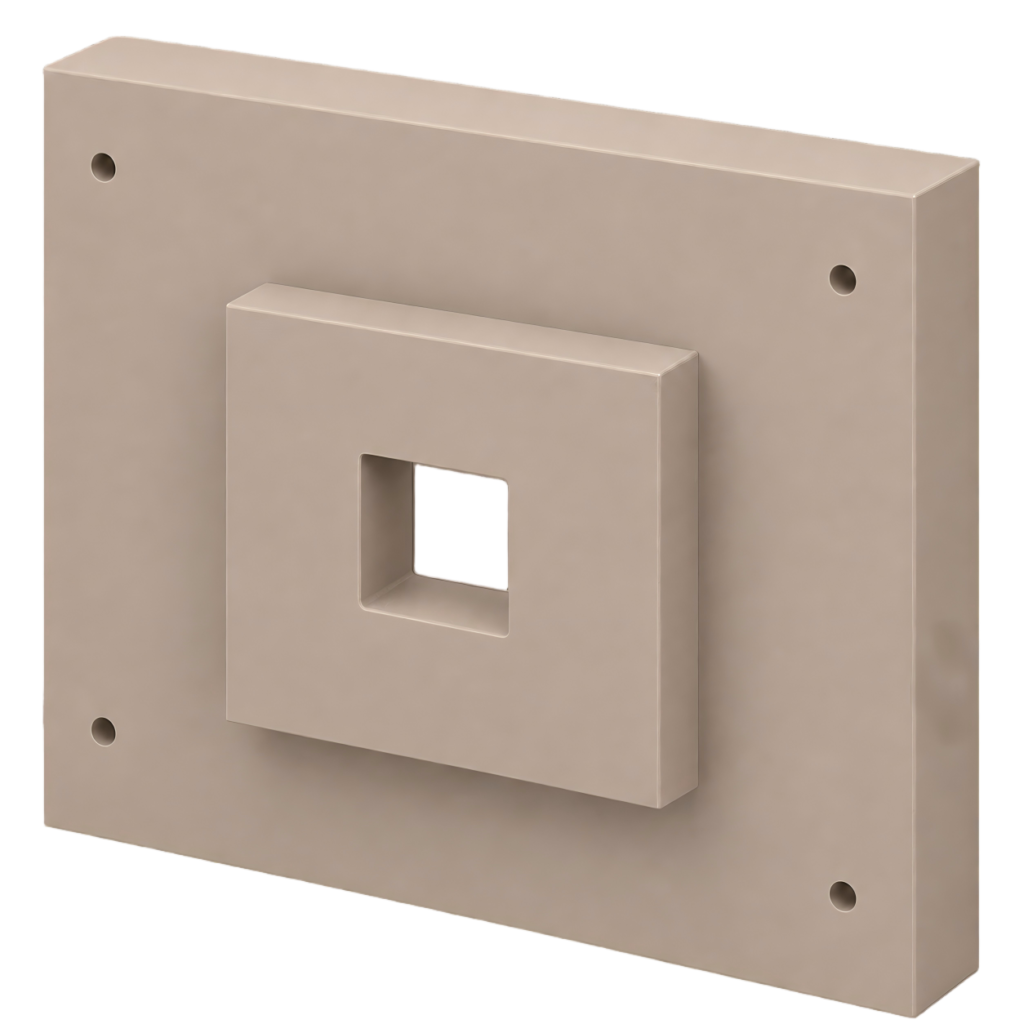
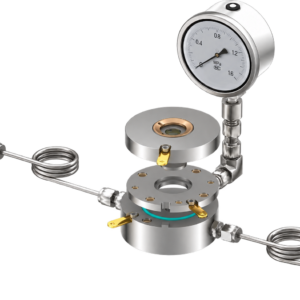
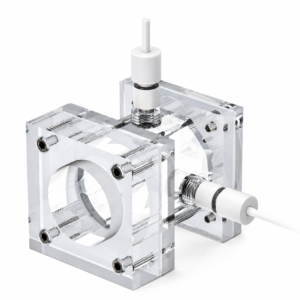
The EC-XAS4 is a modular in situ XAS cell with interchangeable gas-flow and open X-ray access back plates for gas-fed and conventional electrochemical studies. The open configuration supports immersed electrodes, including porous, foil, and supported configurations, while the gas-flow back plate enables controlled reactant delivery to gas-diffusion electrodes. A wide-angle, short-path Kapton window provides efficient X-ray access and supports fluorescence and transmission XAS geometries.
Key Features
- Modular Back-Plate Design: Interchangeable gas-flow and open X-ray access back plates enable flexible electrochemical
configurations. - Wide-Angle, Short-Path Kapton Window: Provides broad X-ray access with a large access area, while the shortened distance to the working electrode enhances signal sensitivity and in situ monitoring performance.
- Independent Gas and Liquid Pathways: In the gas-flow configuration, separate gas and electrolyte pathways enable controlled reactant delivery and independent liquid circulation.
Technical Specifications
| Active area | 1 cm² (10 × 10 mm); customizable |
| Chamber structure | Single-, two-, or three-chamber |
| Electrode system | Two- or three-electrode |
| Window opening angle | Up to 120° |
| Working electrode | Sheet-type electrode; customizable |
| Counter electrode | Standard Ø6.0 mm rod-type electrode; customizable |
| Reference electrode | Standard Ø3.8 mm rod-type electrode; customizable |
| X-ray window material | Kapton film; user-supplied |
| Cell body material | PEEK |
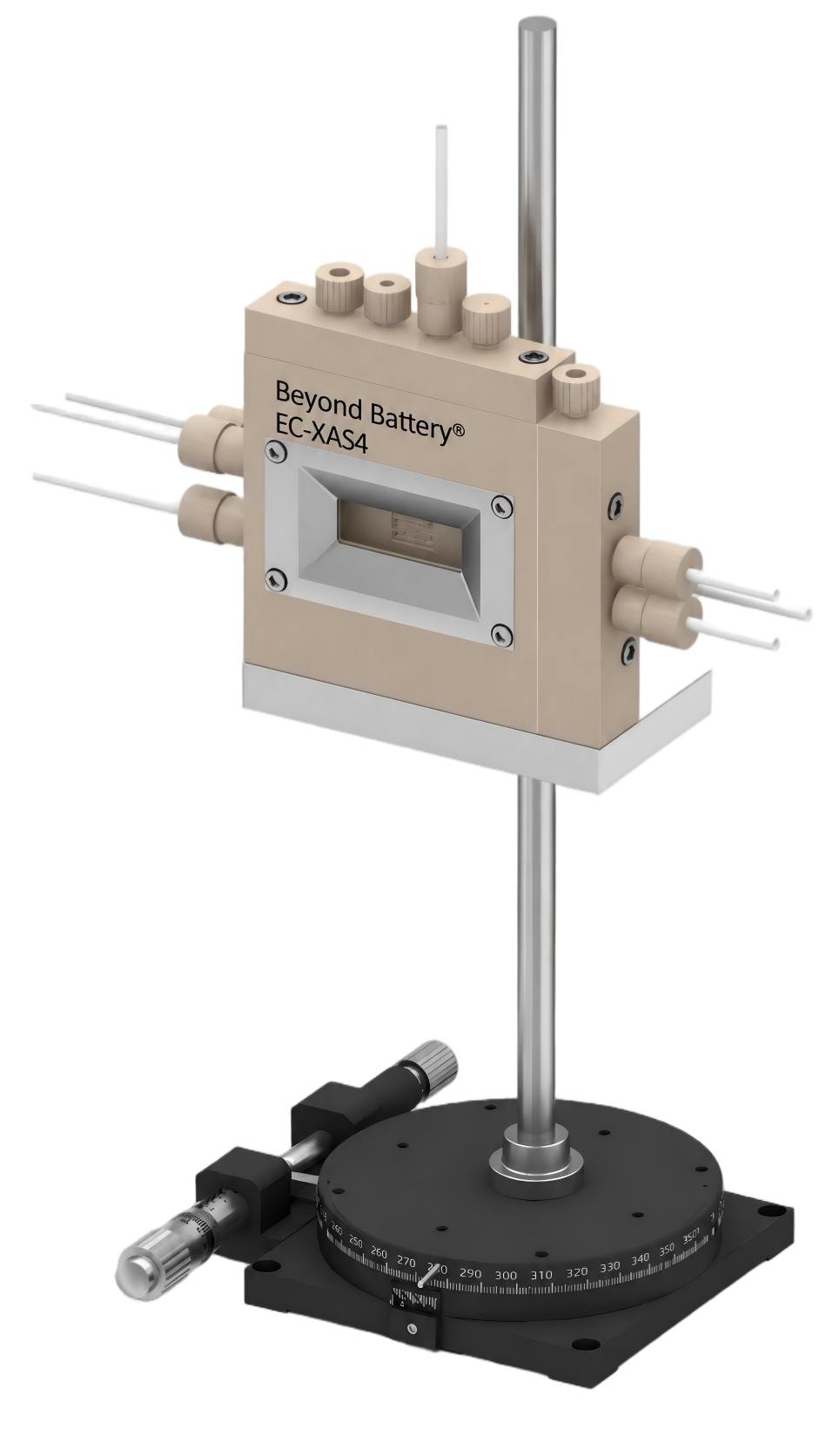
| Positioning accessory | Angular micro-adjustment stage; optional |
Instrument Compatibility
- Synchrotron XAS Beamline Compatibility: Compatible with synchrotron XAS beamlines for in situ measurements. Beamline geometry, detector clearance, stage mounting, and alignment should be confirmed before use.
- Potentiostat Compatibility: Compatible with commercial potentiostats for two- or three-electrode measurements. Electrode connections should be confirmed before use.
Optional Accessory
The angular micro-adjustment stage is an optional accessory supplied separately. It enables fine positioning of the EC-XAS4 and precise adjustment of the X-ray incidence angle, facilitating beam alignment with the Kapton window and working-electrode region for consistent in situ XAS measurements.
Back-Plate Selection Guide
- Gas-Flow Back Plate: A gas-flow configuration for controlled reactant delivery to the backside of a gas-diffusion electrode.
Recommended for gas-fed electrocatalysis, including CO₂/CO electrolysis, ORR, HOR, NRR, and related reactions. Select this back plate when direct gas supply to a GDE is required.
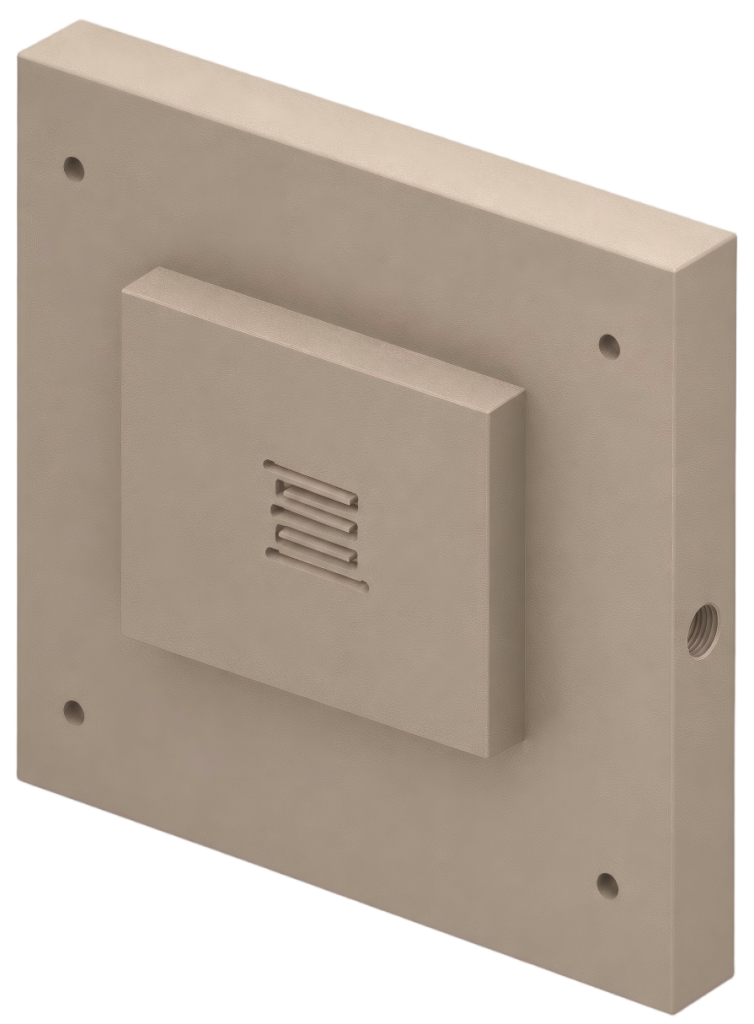
- Open X-ray Access Back Plate: An open configuration providing unobstructed X-ray access for conventional electrochemical XAS
measurements. Recommended for immersed sheet-type, porous, foil, and supported electrodes, with fluorescence or transmission detection selected according to the sample and beamline geometry. Select this back plate when backside gas delivery is not required.
Related Published Application
Time-Resolved In Situ XAS of Cu Catalyst Reconstruction: Yao et al. used fluorescence-mode, time-resolved Cu K-edge XAS at the BL11B beamline of the Shanghai Synchrotron Radiation Facility and the SuperXAS beamline of the Swiss Light Source to monitor Cu catalyst reconstruction during CO electroreduction. The membrane-separated flow cell circulated 0.1 M KHCO₃ through both electrode compartments and employed a carbon-paper-supported Cu working electrode. At −1.1 V versus RHE, spectra acquired with a time resolution of 1 s tracked the loss of Cu–O coordination and formation of metallic Cu–Cu bonds, with linear-combination analysis indicating 99.2% metallic Cu after 30 min.
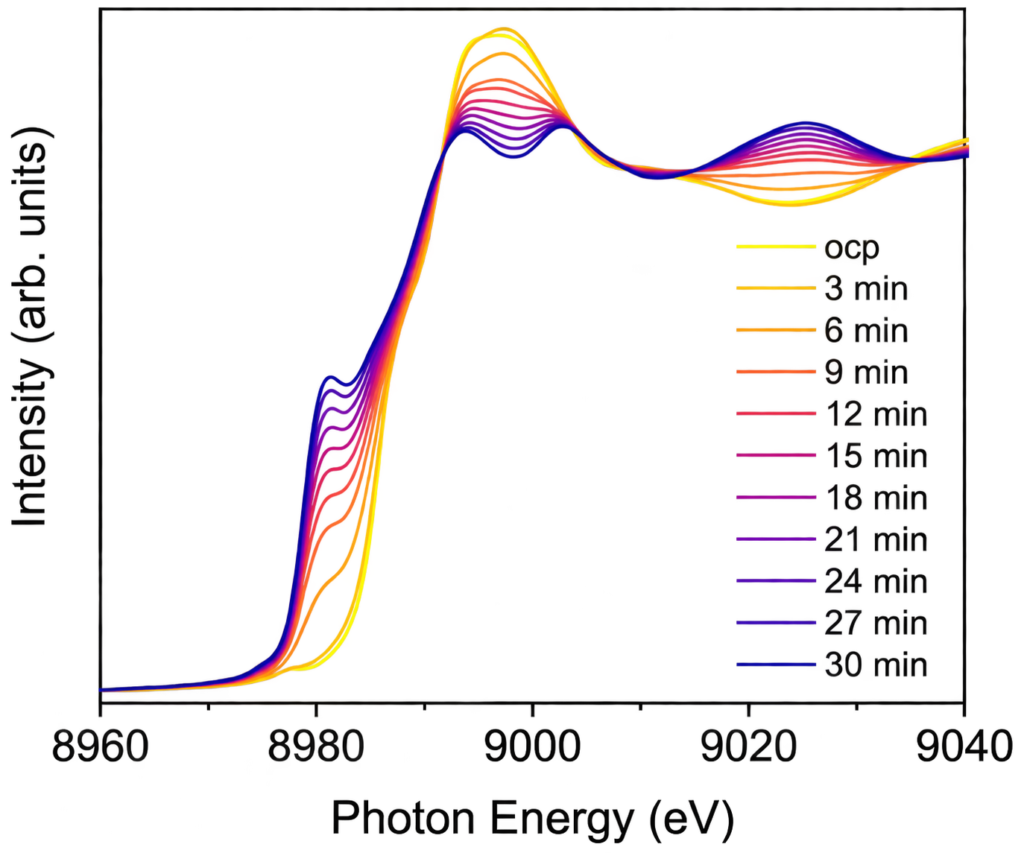
Reproduced from Yao, K. et al. Nat. Commun. 2024, 15, 1749. CC BY 4.0.
Capabilities Relevant to the EC-XAS4
- Enables time-resolved XANES and EXAFS measurements under electrochemical control.
- Supports membrane-separated anolyte and catholyte circulation with a carbon-paper-supported working electrode.
- Tracks oxidation-state and coordination changes during catalyst activation and reconstruction.
Note: The referenced study used a membrane-separated in situ XAS flow cell with a configuration comparable to the EC-XAS4 and is included solely as a related application example.

Reviews
There are no reviews yet.