
Description
Product Description
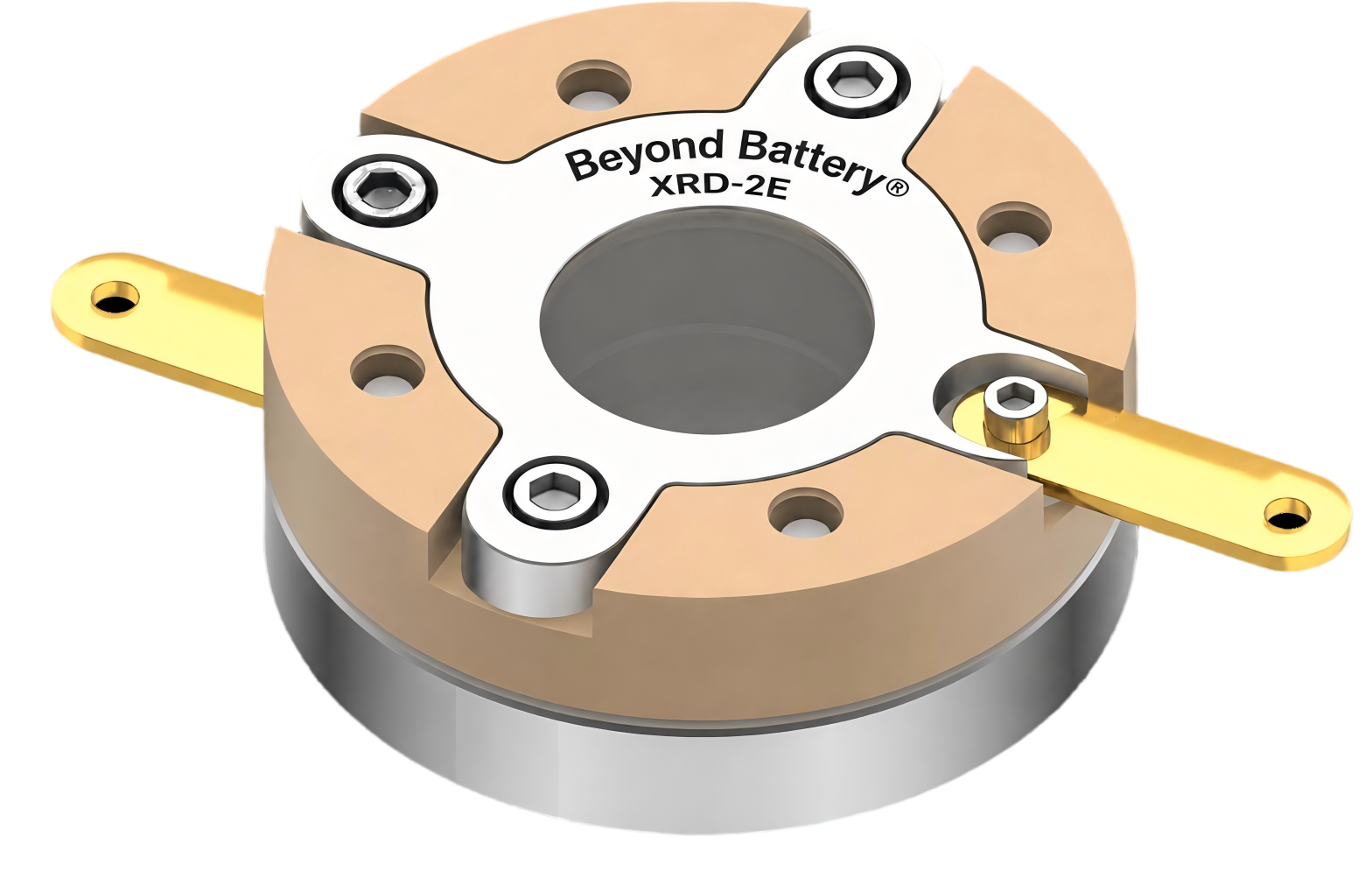
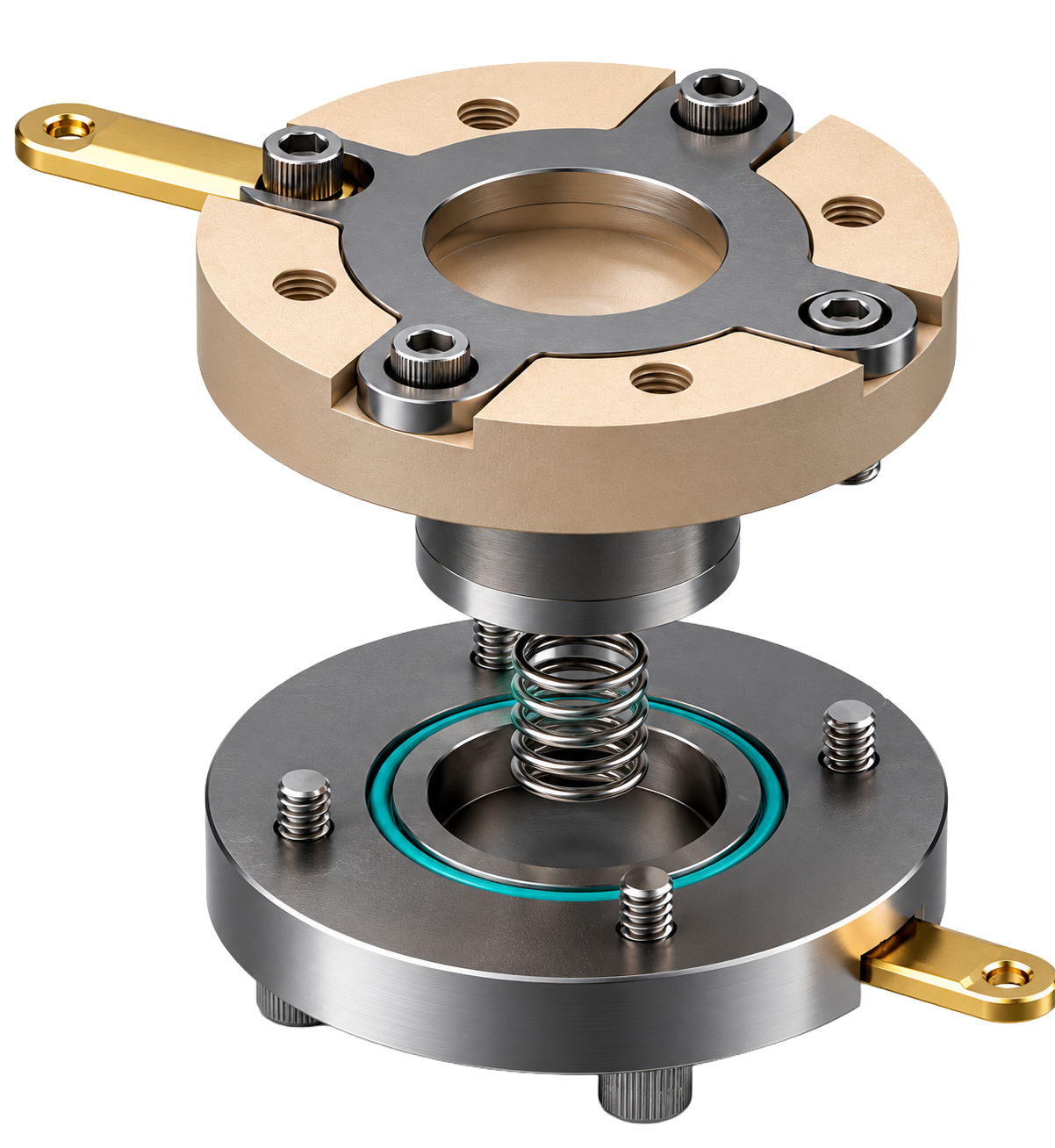
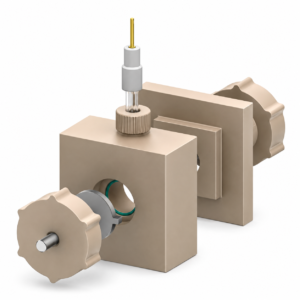
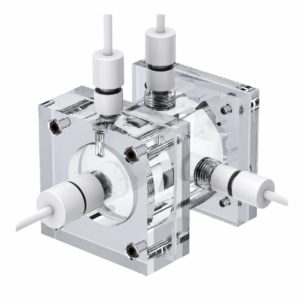
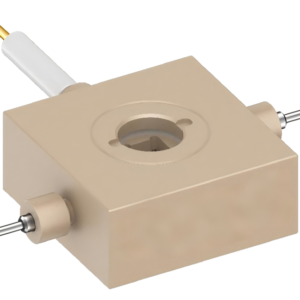
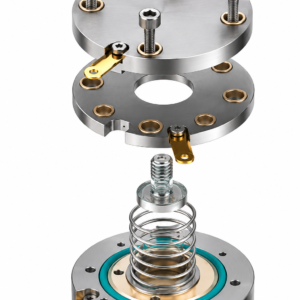
The XRD-2E is a sealed two-electrode battery test cell designed for in situ X-ray diffraction measurements during charge/discharge cycling. A low-background beryllium window provides direct X-ray access to the cell-stack, while the spring-loaded structure maintains stable interfacial contact. The high-purity titanium body, PEEK insulation, and chemically resistant O-ring sealing support repeatable assembly, glovebox preparation, and post-test sample recovery for rechargeable battery studies.
Key Features
- Bruker D8-Compatible XRD Measurement: Compatible with Bruker D8 X-ray diffractometer systems for operando XRD monitoring during battery cycling.
- Low-Angle XRD Accessibility: Supports XRD measurements from a minimum operating angle of 3°, enabling broader low-angle access for operando configurations.
- Spring-Loaded, Glovebox-Compatible Design: Maintains stable cell-stack compression and enables glovebox assembly with reliable O-ring sealing for subsequent operation under ambient conditions.
Technical Specifications
| Minimum operating angle | 3° |
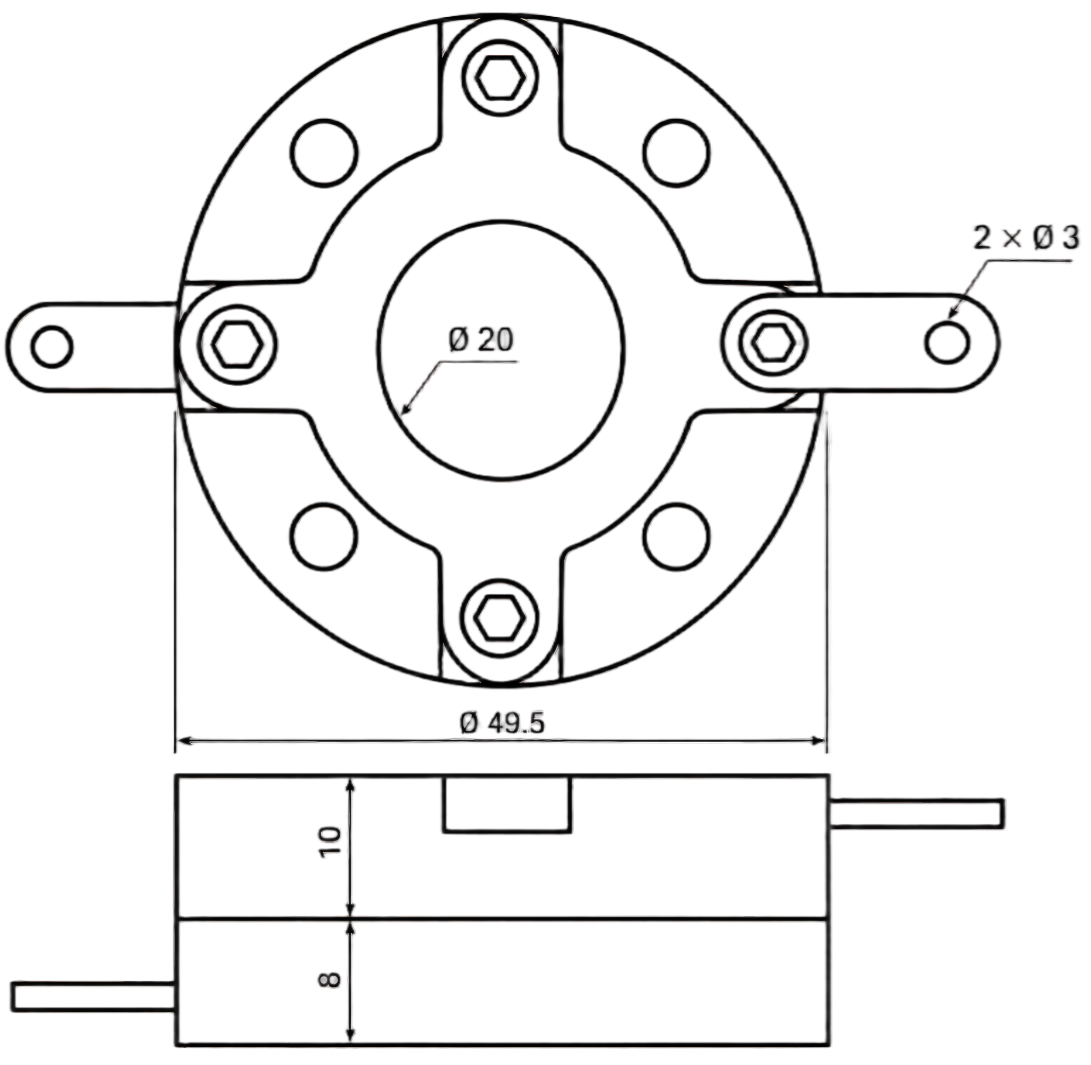
| Effective optical window diameter | Ø20 mm |
| Applicable sample diameter | Ø20 mm |
| Optical window material | Beryllium (Be) |
| Electrode system | Two-electrode |
| Cell body material | Ti |
| Insulation material | PEEK |
| Current collector tab | Gold-plated copper |
| Sealing method | Chemically resistant O-rings |
| Cell body dimensions | Ø49.5 mm × H18 mm |
Note: Solid beryllium is relatively stable and poses low skin-contact risk; avoid inhaling dust or aerosols and wash hands after handling.
Instrument Compatibility
- XRD System Compatibility: Compatible with Bruker D8 systems and other X-ray diffractometers with suitable mounting and
scan geometries. The sample holder, incident angle range, beam path, and instrument clearance should be verified before testing. - Electrochemical Testing Compatibility: Compatible with commercial electrochemical workstations and battery testing systems that support two-electrode charge/discharge testing.
Related Published Application
Operando XRD Tracking of Conversion–Alloying Reactions: Alvi et al. used a Bruker D8 DISCOVER diffractometer with a Be-window operando cell to study SSBT-based anodes in lithium half-cells at C/5. Potential dependent XRD patterns revealed lattice expansion, transient Li₂Te formation, and reversible structural evolution during cycling.
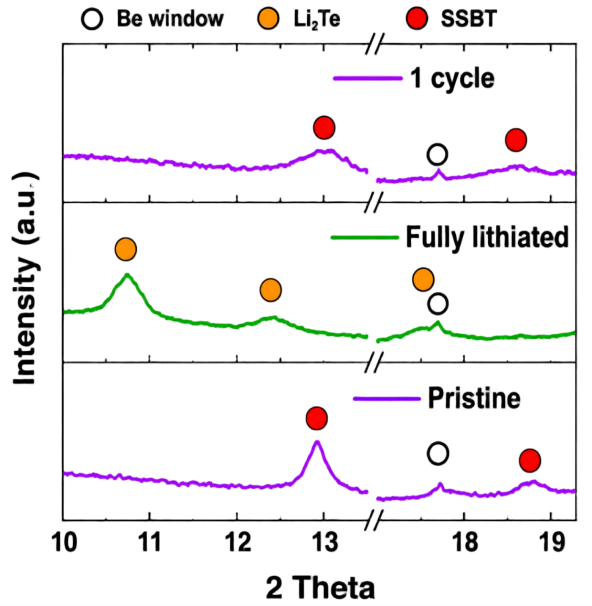
Reproduced from Alvi, S. et al. EES Batteries 2026, 2, 1003–1011. CC BY 4.0.
Capabilities Relevant to the XRD-2E
- Real-time tracking of phase evolution during battery cycling.
- Detection of transient crystalline reaction products.
- Correlation of structural changes with cell potential.
Note: The cited publication used a custom-designed operando XRD battery test cell rather than the Beyond Battery XRD-2E. The reference is included to demonstrate the relevant research methodology and should not be interpreted as describing or evaluating the XRD-2E.

Reviews
There are no reviews yet.