

Description
(2026 Upgraded version)
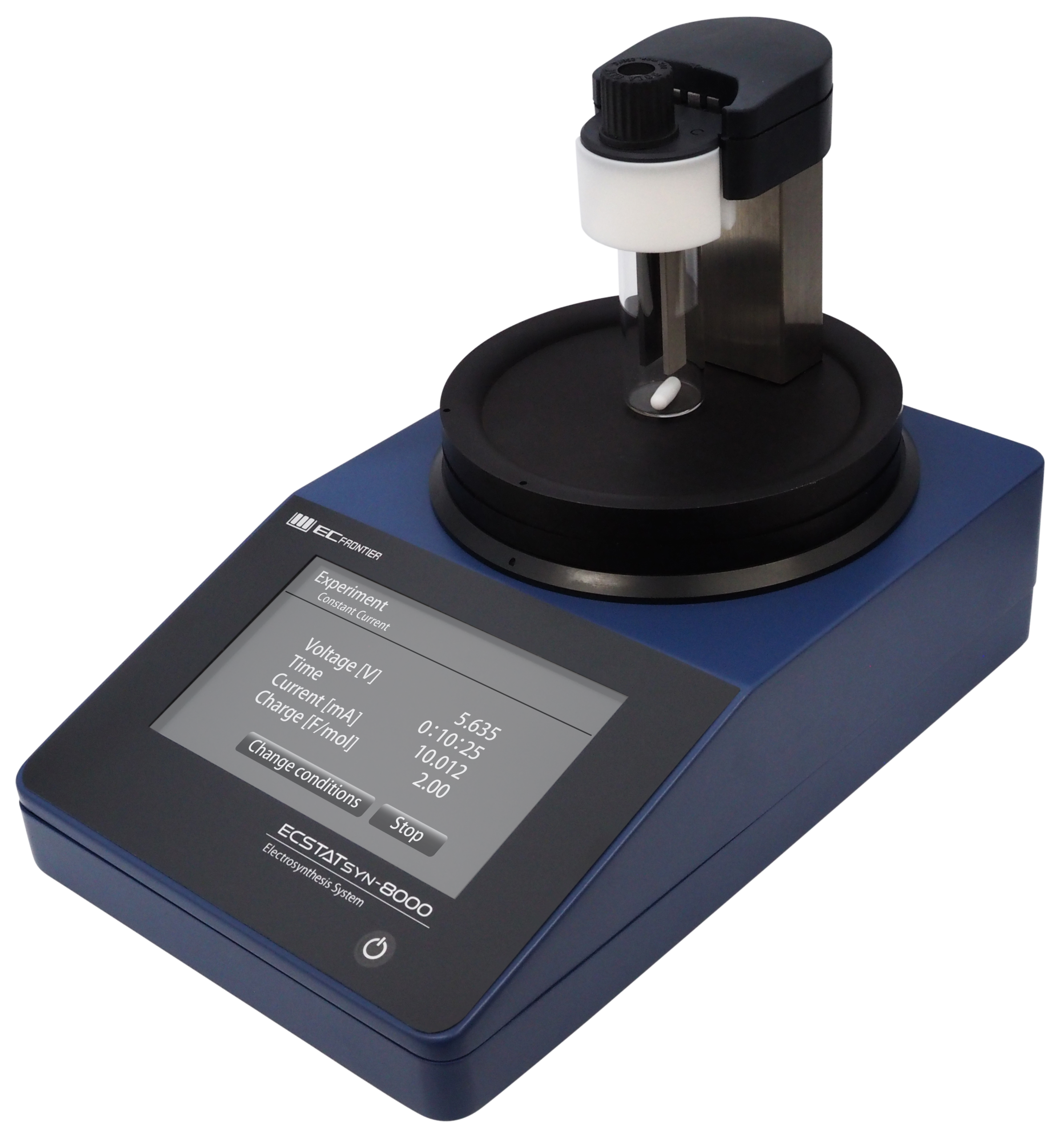
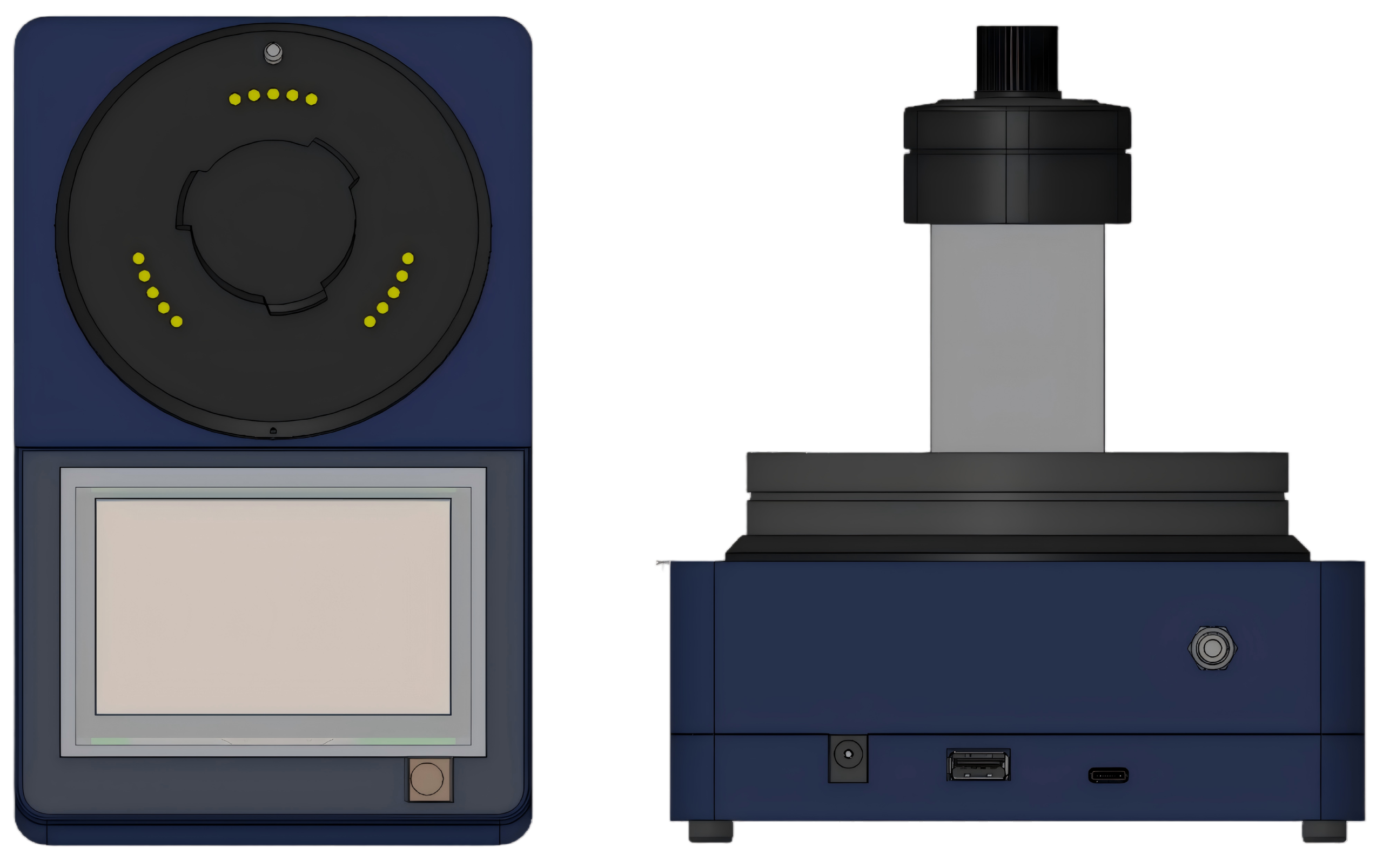
The ECSTATsyn-8000 is a batch electrosynthesis system that integrates a potentiostat and magnetic stirrer into a compact, all-in-one unit. Electrosynthesis can be performed simply by entering the required electrolysis conditions through its intuitive touchscreen interface, while experimental settings and measurement data can be saved to a USB flash drive in CSV format for convenient analysis and record keeping.
Key Features
- Integrated Electrosynthesis System: Combines a potentiostat and magnetic stirrer in a compact, all-in-one benchtop instrument.
- Six Measurement Techniques: Supports constant current, constant voltage with voltage or potential control, fast-pulse constant current, fast-pulse constant voltage, cyclic voltammetry (CV), and differential pulse voltammetry (DPV).
- Fast-Pulse Control: Provides polarity reversal intervals as short as 5 ms in the fast-pulse current and voltage modes.
- Standalone and Intuitive Operation: Operates independently without a PC through an intuitive touchscreen interface, while experimental conditions and measured data can be saved to a USB flash drive in CSV format.
Technical Specifications
| Max. output / Control voltage | ±10 V |
| Control potential / Voltage resolution | 1 mV |
| Measured potential / Voltage resolution | 1 mV |
| Max. output current | ±200 mA |
| Current ranges | ±200 μA and ±200 mA |
| Control current resolution | 10 μA |
| Measured current resolution | 1 nA at 200 μA range; 1 μA at 200 mA range |
| Stirrer speed | 50–1,000 rpm, in 10 rpm increments |
| Power supply | 24 V DC, 0.75 A (AC adapter not included) |
| Dimensions | W150 × D250 × H180 mm, excluding protrusions |
| Weight | Approx. 2.2 kg |
| Operating Temp./Hum. range | 10–40°C / 30–80% RH, non-condensing |
Measurement Techniques & Electrode Configurations
The ECSTATsyn-8000 supports four electrosynthesis modes and two electroanalytical modes, using two- or three-electrode configurations depending on the selected technique.
| Mode | Technique | Electrode Configuration | Key Capability |
| Electrosynthesis | Constant Current | 2-electrode | Applies a constant current of up to 200 mA between the anode and cathode |
| Constant Voltage | 2-electrode (voltage control)
3-electrode (potential control) |
Controls the cell voltage or working-electrode potential up to 10 V | |
| Fast-Pulse Constant Current | 2-electrode | Applies current up to 200 mA with polarity reversal intervals as short as 5 ms | |
| Fast-Pulse Constant Voltage | 2-electrode (voltage control)
3-electrode (potential control) |
Controls voltage or potential up to 10 V with polarity reversal intervals as short as 5 ms | |
| Analysis | Cyclic Voltammetry | 3-electrode | Determines substrate redox potentials relative to a ferrocene reference |
| Differential Pulse Voltammetry | 3-electrode | Determines oxidation and reduction peak potentials, with enhanced sensitivity for μM-level samples |
Typical Applications
| Application Area | Relevant Research Capabilities |
| Pharmaceutical and Agrochemical Development | Controlled-current and controlled-voltage electrosynthesis, supported by CV and DPV for substrate redox characterization |
| New Synthetic Method Development | Constant-current, constant-voltage, fast-pulse, and polarity-reversal electrolysis with time- or charge-based endpoints |
| Natural Product and Metabolite Synthesis | Batch electrosynthesis with adjustable current, voltage, stirring speed, reaction time, and accumulated charge |
| Metal-Complex Catalyst Development | Controlled electrolysis and CV/DPV analysis for investigating catalyst-related redox behaviour |
Note: Users of the ECSTATsyn-8000 include Mahito Atobe and Naoki Shida of Yokohama National University, Hyunwoo Kim of Pohang University of Science and Technology, Fu-Ming Wang of National Taiwan University of Science and Technology, and Kazuhiro Okamoto of the University of Toyama. Application studies using this model are currently underway.

Reviews
There are no reviews yet.