
Description
Product Overview
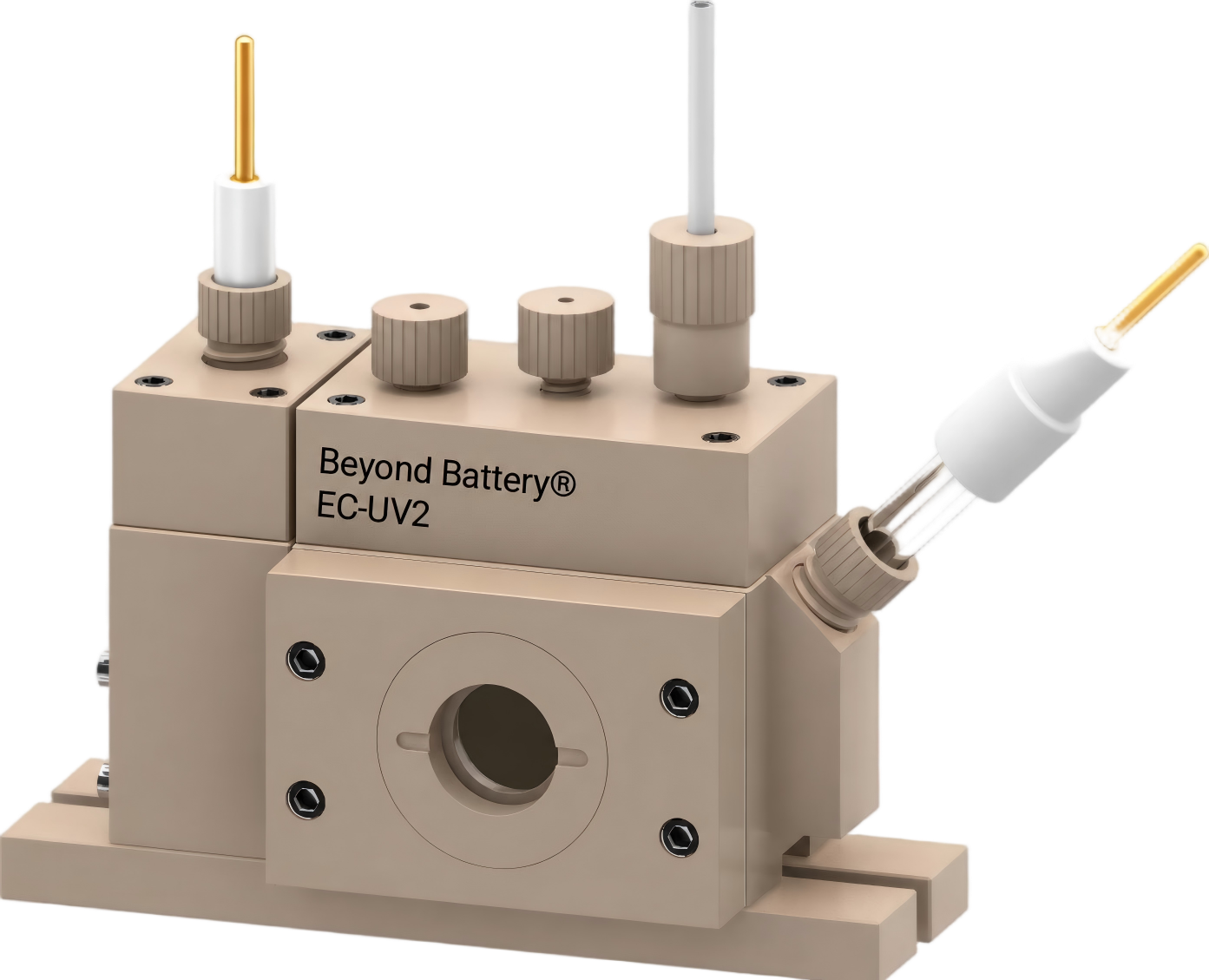
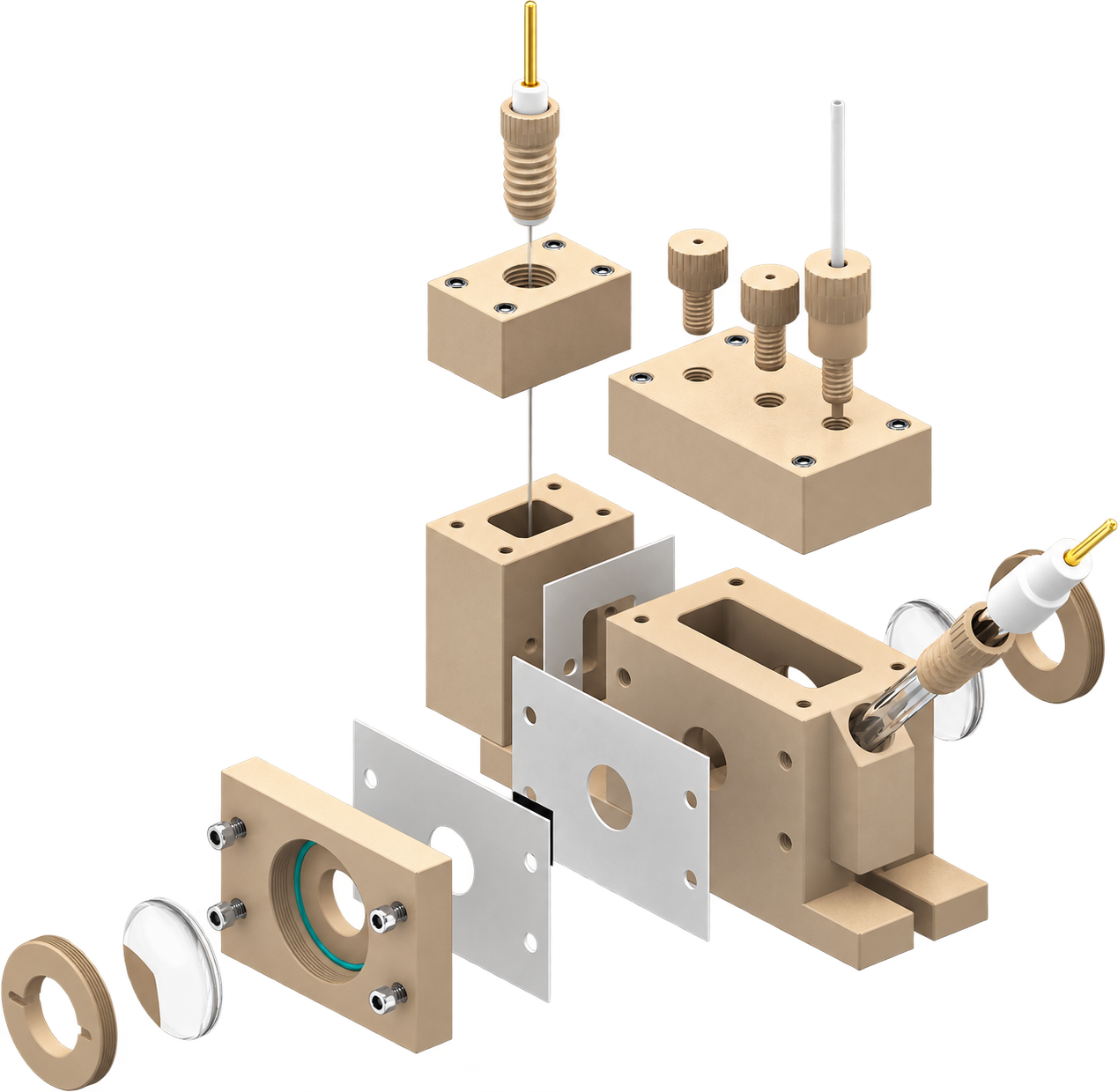
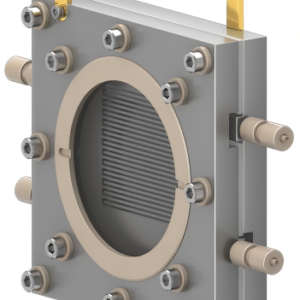
The EC-UV2 is an H-type, two-chamber spectroelectrochemical cell designed for in situ UV–Vis measurements under electrochemical control. Its replaceable membrane separates the electrode compartments, while gas inlet/outlet access to the working compartment supports controlled gas introduction. The sapphire optical window and transparent conductive working electrode enable potential-dependent UV–Vis monitoring of redox processes, reaction intermediates, and electroactive interfaces.
Key Features
- Membrane-Separated H-Type Design: A replaceable membrane separates the working and counter electrode compartments for independent reaction environments.
- Gas Access to Working Compartment: Integrated gas inlet/outlet access supports controlled gas introduction during in situ electrochemical measurements.
- Potential-Controlled UV–Vis Monitoring: Combines three-electrode electrochemical control with real-time monitoring of optical absorption changes during electrochemical reactions.
Technical Specifications
| Chamber structure | Two-chamber (H-type) |
| Electrode system | Three-electrode |
| Working electrode | ITO or FTO electrode; customizable |
| Counter electrode | Platinum wire or graphite rod electrode |
| Reference electrode | Standard Ø6 mm reference electrode |
| Cell body material | PEEK |
| Optical window material | Sapphire |
| Optical window diameter | Ø25 mm |
| Membrane separation | Replaceable membrane |
| Gas connections | Inlet/outlet access to the working compartment |
Instrument Compatibility
- UV–Vis Spectrophotometer Compatibility: Designed for in situ UV–Vis measurements with the Shimadzu UV-2600 spectrophotometer.
- Potentiostat Compatibility: Supports three-electrode electrochemical control. Electrical connections should be confirmed before use.
Typical Applications
- Membrane-Separated Spectroelectrochemistry: Investigating electrochemical reactions requiring separation of working and counter electrode compartments.
- Gas-Involved Electrochemical Studies: Supporting in situ UV–Vis measurements with controlled gas introduction into the working compartment.
- Redox Process Monitoring: Tracking potential-dependent absorption changes and oxidation-state evolution during electrochemical reactions.
- Electrocatalyst & Electroactive Material Studies: Monitoring catalyst states, reaction intermediates, and electroactive interfaces under applied potentials.
Notes
- Working-electrode configurations and cell dimensions can be customized upon request, subject to confirmation.
- The gas ports provide access for external gas introduction; gas-flow and atmosphere-control equipment are not specified as integrated components.
- Model-specific published application studies have not been identified in the current product manual.


Reviews
There are no reviews yet.