
Building a Reliable CO₂RR Experimental Platform: System Design, Fluid Management, and Mass Transport Optimization
Introduction with the rapid development of CO2 electroreduction research, an increasing number of laboratories are transitioning from traditional H-type electrochemical cells (H-cells) to gas diffusion electrode (GDE)-based flow-cell platforms for moderate-to-high current density CO2 electroreduction. However, experimental stability, reproducibility, and moderate-to-high current density operations are often limited by the overall system design rather than the intrinsic performance of the catalysts[1–3]. This article systematically deconstructs the core modules and design principles of CO2 reduction reaction (CO2RR) experimental platforms and emphasizes the decisive role of mass transport efficiency and fluid stability in ensuring reliable experimental outcomes.
- Comparison of CO2 Mass Transport Pathways in H-cells and Flow Cells
In traditional H-cells, CO2 first dissolves in the electrolyte and then diffuses through the aqueous phase to reach the catalyst surface. This leads to significant local pH fluctuations and enhanced hydrogen evolution reaction (HER), limiting achievable current densities[2,3]. In contrast, flow cells equipped with GDEs allow gaseous CO2 to directly reach the catalyst layer through the electrode pores, shortening the mass transport pathway, increasing local CO2 concentration, and supporting moderate-to-high current density operation by establishing an efficient gas–liquid–solid three-phase interface[2,3].
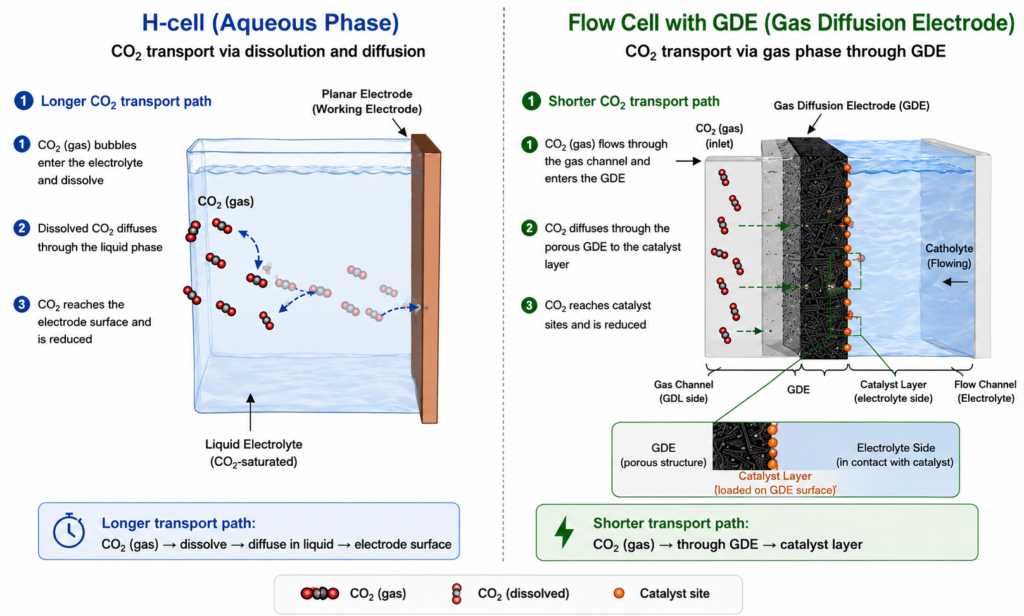
Figure 1 illustrates the comparison of CO2 transport pathways in H-cells and GDE flow cell systems, showing the shortened diffusion path and improved local CO2 supply in the latter.
- The Three Core Subsystems of a CO2RR Platform
The CO2 Reduction Complete System consists of three integrated modules: Electrolytic Reaction Module, Fluid Transfer & Control Module, and Fluid Storage & Interconnection Module. These modules work collaboratively to ensure:
- Precise potential control
- Stable gas–liquid interfaces
- Efficient mass transport
- Data reproducibility
- Long-term operational reliability[1,2]
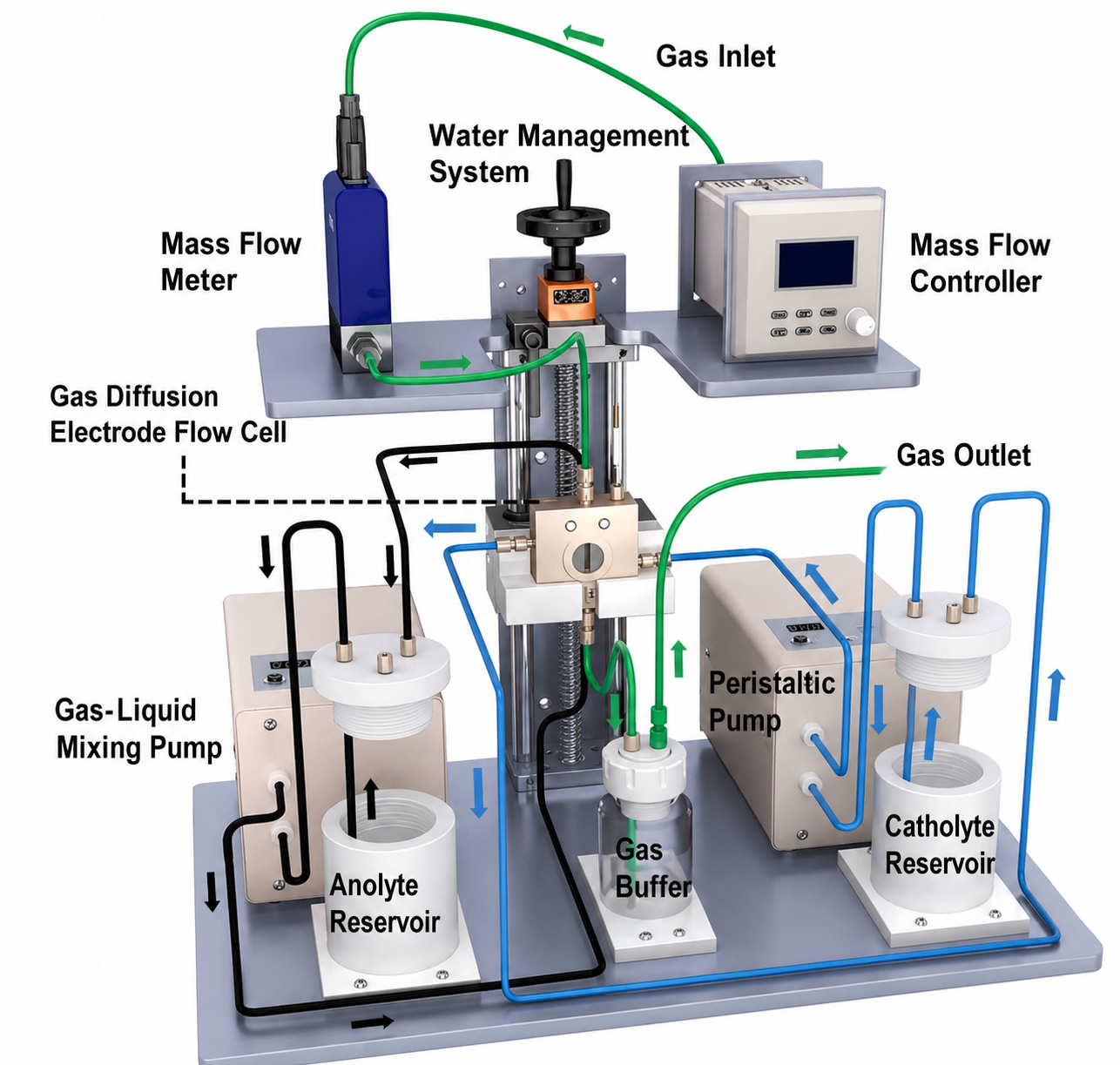
Figure 2 presents a schematic overview of the complete CO2RR platform
Table 1. Components and Functions of Each Module in the CO2RR System
| Module | Key Components | Function |
| Electrolytic Reaction Module | GDE flow cell, working electrode, counter electrode, reference electrode, ion-exchange membrane | Enables electrochemical CO₂ conversion under GDE flow cell operating conditions |
| Fluid Transfer & Control Module | Water Management System, peristaltic pump, gas-liquid mixing pump, mass flow meter & controller | Responsible for fluid and gas delivery, flow rate control, and pressure/flow management |
| Fluid Storage & Interconnection Module | Anolyte / Catholyte Reservoir, gas buffer, PTFE tubing | Provides fluid storage, buffering, and interconnection between modules |
- Electrochemical Measurement System
The potentiostat not only provides potential control but also determines the reliability of experimental data:
- Potential control precision
- Stable current response
- iR compensation capability
- Long-term chronoamperometric stability[4]
Common testing techniques include cyclic voltammetry (CV), linear sweep voltammetry (LSV), chronoamperometry (CA), and electrochemical impedance spectroscopy (EIS). At high current densities, the iR drop becomes more pronounced, and the reference electrode placement and wiring significantly affect data reliability. Observations indicate that fluctuations in catalyst performance often originate from potential drift, contact resistance variations, or improper RE positioning, rather than the catalyst itself[4].
Importance of Proper iR Compensation in CO2RR In a three-electrode configuration, the workstation controls the working electrode (WE) potential relative to the reference electrode (RE). Uncompensated resistance (Ru) between WE and RE leads to a voltage drop:
Vloss = iRu
Consequently, the actual potential at the catalyst surface may deviate from the set value. This issue is amplified at high current densities, resulting in:
- Deviation of actual catalyst surface potential from the set value
- Faradaic efficiency discrepancies[4]
- Non-comparability of potential data
- Reduced experimental reproducibility
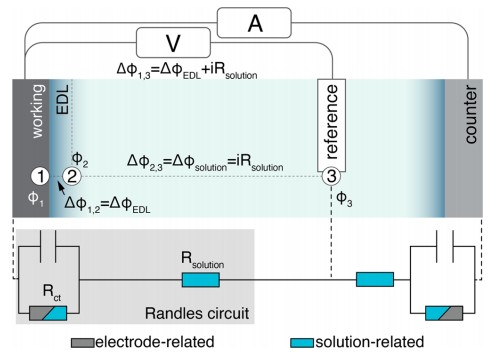
Figure 3 shows the three-electrode configuration and iR compensation schematic, emphasizing the need for proper compensation to obtain accurate and comparable CO2RR data[4].
How Flow Cells Mitigate iR-Related Errors Compared to traditional H-cells, flow cells with GDEs effectively reduce uncompensated resistance (Ru) due to:
1. Shorter ion transport pathways: Thin electrolyte layers, membrane-separated structures, or shortened electrode gaps and optimized flow-cell structures significantly reduce ionic path lengths, lowering ohmic resistance[2,3].
2. More stable local CO2 supply: GDEs allow gaseous CO2 to directly permeate the catalyst layer, minimizing concentration polarization and local potential fluctuations, enhancing potential stability at high current densities[2,3].
3. Suitability for moderate-to-high current density operation: Under industrially relevant current densities (>100–500 mA cm-2), H-cells are prone to severe iR drop, gas bubble accumulation, and unstable local conductivity. Flow cells, with shorter current paths, more stable fluid dynamics, and faster bubble detachment, support accurate potential control[2,3].
It should be noted that flow cells and GDEs can significantly reduce Ru but cannot completely eliminate iR drop. Therefore, CO2RR experiments still require EIS measurements and appropriate iR compensation to ensure data comparability across different systems[1,2].
- Core Characteristics of the Electrolytic Reaction System
The flow cell structure directly determines:
- CO2 mass transport efficiency
- Electrolyte flow characteristics
- Bubble detachment capability
- Ohmic resistance
- Reaction uniformity[3]
The catalyst layer is positioned adjacent to the electrolyte side to ensure good ion contact, while CO2 gas enters from the GDE side, enabling an efficient three-phase interface reaction.
- Fluid Stability and Data Reliability
Experimental evidence shows that fluid stability correlates with data stability. Key components include peristaltic pumps, gas–liquid mixed-flow pumps, mass flow controllers, and water management systems. Stable gas–liquid interfaces and efficient bubble removal prevent local blockage, current fluctuations, Faradaic efficiency drift, and local pH variations[2,3].
- Limitations of DIY Systems and Advantages of Integrated Platforms
Self-assembled or DIY CO2RR systems are often useful for preliminary testing, but they may introduce hidden variables when experiments move toward moderate-to-high current density conditions. In GDE-based flow cells, system-level factors such as gas pressure balance, electrolyte flow stability, membrane compression, electrode contact, and tubing compatibility can strongly influence current response, Faradaic efficiency, and long-term stability. Therefore, poor reproducibility may not always originate from the catalyst itself, but from unstable platform construction.[2–4].
| Aspect | Limitations of DIY Systems | Advantages of Integrated GDE-Based Platforms |
| Component compatibility | Components from different suppliers may have mismatched dimensions, interfaces, or sealing methods | Pre-matched modules reduce assembly errors and leakage risks |
| Gas–liquid pressure balance | Difficult to maintain stable pressure between gas and liquid compartments | Water management and flow-control modules help stabilize the GDE interface |
| Flow-path stability | Tubing layout, pump selection, and connector quality vary between setups | Standardized PTFE/PEEK flow paths improve chemical compatibility and reproducibility |
| Cell Assembly Consistency | Variations in membrane positioning, electrode alignment, and compression may affect sealing and electrical contact | Standardized cell geometry and assembly procedures improve consistency and reproducibility |
| Bubble management | Gas accumulation may block channels and cause current fluctuation | Gas–liquid mixed-flow pumps and optimized circulation help remove bubbles |
| Data reproducibility | Results may vary between operators or laboratories due to uncontrolled system differences | Integrated configuration improves repeatability and reduces troubleshooting time |
For GDE-based CO₂RR research, an integrated platform is not only a convenience but also a way to control system-level variables, especially when evaluating catalysts under moderate-to-high current density conditions.
- Key Checkpoints for Constructing a Reliable CO2RR Platform
When constructing a reliable CO₂RR experimental platform, careful attention must be paid to both system-level and interface-level factors to ensure reproducibility and data reliability. High-precision potentiostats are essential for stable potential control, as even minor fluctuations can significantly affect Faradaic efficiency and catalyst performance under moderate-to-high current densities. Proper placement of the reference electrode and minimized uncompensated resistance (iR drop) are critical for accurate potential measurement. Equally important is the optimization of CO₂ flow rates and gas–liquid pressure balance, which maintain a stable three-phase interface at the GDE and prevent flooding, mass transport limitations, or local pH fluctuations.
Beyond fluid and potential control, effective bubble management, including rapid detachment and circulation, ensures stable local reactant concentrations and ionic conductivity. Leak-free flow paths, standardized tubing (PTFE/PEEK), and compatible membrane–electrode assemblies reduce variability caused by inconsistent cell assembly, compression pressure, or electrode–membrane misalignment. Integrating these considerations within a modular, standardized platform not only improves repeatability across operators and laboratories but also enables accurate evaluation of catalyst activity under industrially relevant current densities, bridging the gap between fundamental CO₂RR research and scalable applications.
- Conclusion
As CO2RR research moves from basic catalyst screening toward moderate-to-high current density evaluation, GDE-based flow-cell platforms become essential for improving mass transport, stabilizing the gas–liquid–solid interface, and enhancing data reproducibility[1–4].
- References
1. Weekes, D. M.; Salvatore, D. A.; Reyes, A.; Huang, A.; Berlinguette, C. P. Electrolytic CO₂ Reduction in a Flow Cell. Acc. Chem. Res. 2018, 51, 910–918. https://doi.org/10.1021/acs.accounts.8b00010
2. Rabiee, H.; Ge, L.; Zhang, X.; Hu, S.; Li, L.; Zhang, L.; Dai, S. Gas diffusion electrodes (GDEs) for electrochemical reduction of carbon dioxide, carbon monoxide, and dinitrogen to value-added products: a review. Energy Environ. Sci. 2021, 14, 1959–2008. https://doi.org/10.1039/D0EE03756G
3. Higgins, D.; Hahn, C.; Xiang, C.; Jaramillo, T. F.; Weber, A. Z. Gas-Diffusion Electrodes for Carbon Dioxide Reduction: A New Paradigm. ACS Energy Lett. 2019, 4, 317–324. https://doi.org/10.1021/acsenergylett.8b02035
4. Zheng, W. iR Compensation for Electrocatalysis Studies: Considerations and Recommendations. ACS Energy Lett. 2023, 8, 1952–1958. https://doi.org/10.1021/acsenergylett.3c00366
Other Blog Posts You Might Like

Understanding Electrolytic Cells: Types, Components, and Applications
An electrolytic cell is an essential electrochemical device that drives a non-spontaneous redox reaction using…
Read more
Event Recap: Future Development of Lithium-Ion Batteries – From ICAMEEH 2024
From September 24 to 27, 2024, we are honored to be the industrial exhibitor of…
Read more
For scientists, by scientists.
We give you fast, reliable, and cost-effective access to materials, tools, and equipment, and we…
Read more