
Description
Product Description
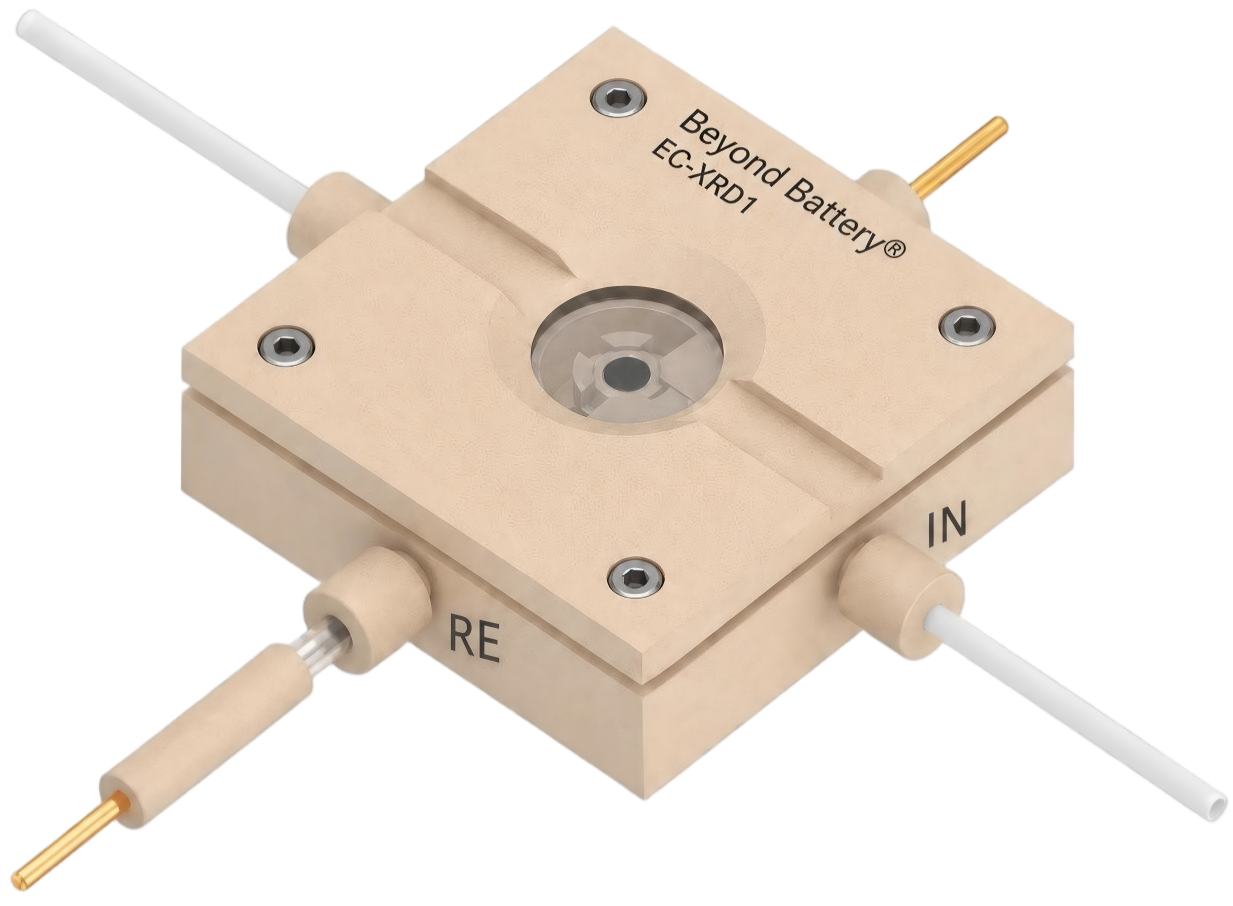
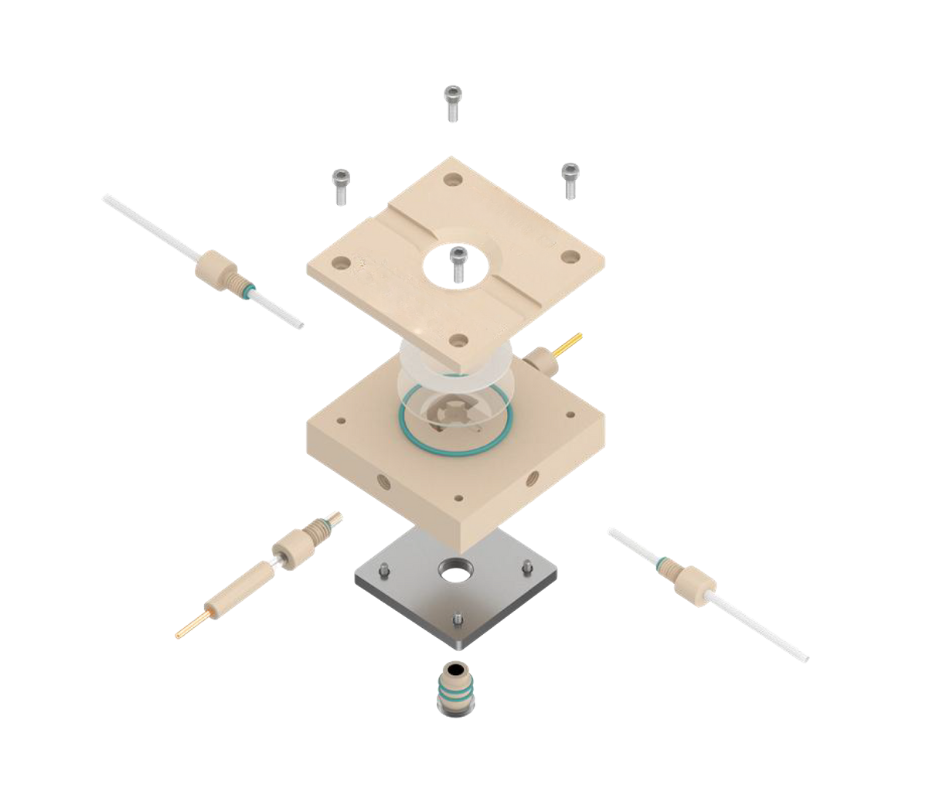
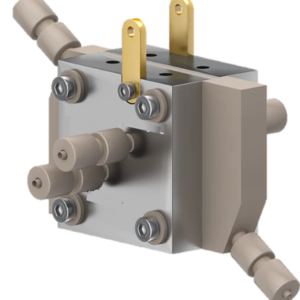
The EC-XRD1 provides direct X-ray access to an interchangeable disk working electrode through an X-ray-transparent beryllium (Be) window while maintaining three- electrode electrochemical control. Its compact flow-compatible design supports both syringe filling and external electrolyte circulation, making it suitable for tracking phase transformations and structural evolution of electrode materials under applied electrochemical conditions.
Product Features
- Direct Structural Observation: Be-window access and a short X-ray path enable direct probing of the working-electrode surface.
- Flexible Disk-Electrode Selection: Uses a standard Ø5 mm glassy carbon disk and supports interchangeable Au, Pt, Ag, graphite, and pyrolytic graphite disks.
- Operando Phase-Evolution Analysis: Enables potential- and time-dependent monitoring of crystalline phase transformations and structural evolution of electrode materials.
Technical Specifications
| WE-optical window distance | < 3 mm |
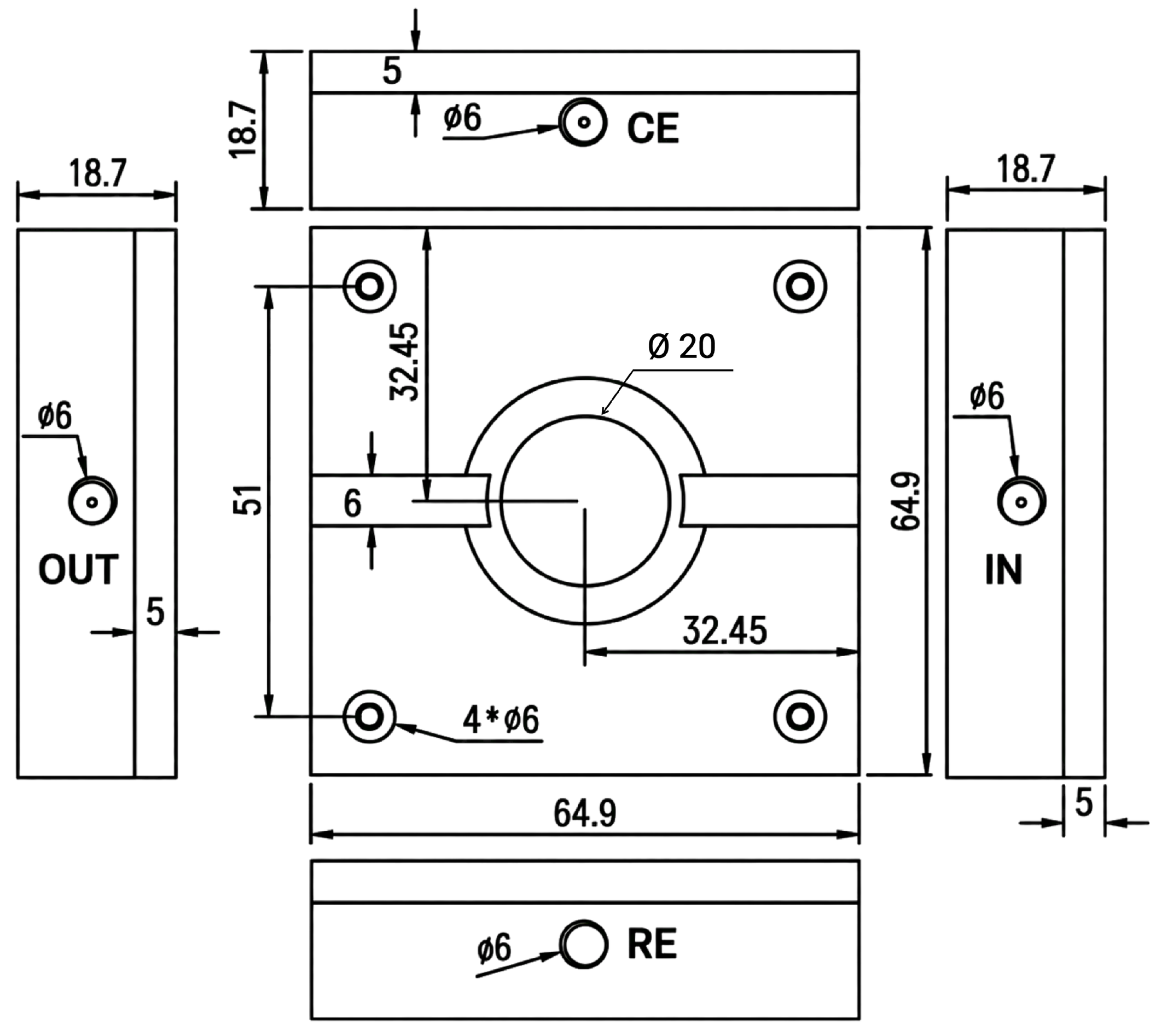
| Optical window diameter | Ø25 mm (effective diameter Ø20 mm) |
| Chamber structure | Single-chamber |
| Electrode system | Three-electrode |
| Working electrode | Ø5 mm glassy carbon disk electrode (standard); Au, Pt, Ag, graphite, or pyrolytic graphite disk electrodes (optional) |
| Reference electrode | Ag/AgCl or Ag/Ag⁺ electrode |
| Counter electrode | Ø1 mm Platinum wire electrode |
| Cell body material | PEEK + Ti |
| Optical window material | Beryllium (Be) |
| Cell body dimensions | L65 × W65 × H19 mm |
Note: Solid beryllium is relatively stable and poses low skin-contact risk; avoid inhaling dust or aerosols and wash hands after handling.
Instrument Compatibility
- XRD System Compatibility: Compatible with laboratory X-ray diffractometers that accommodate external electrochemical cells. Measurement geometry, sample-stage clearance, and mounting should be confirmed before use.
- Potentiostat Compatibility: Compatible with commercial three-electrode potentiostats for electrochemical control during operando XRD measurements.
Related Published Application
Operando XRD Tracking of LiCoO₂ Structural Evolution during OER: A custom-designed three-electrode operando XRD/XAFS cell was used to track LiCoO₂ structural evolution during OER in 0.1 M KOH. As the potential increased stepwise from 1.1 to 1.7 V versus RHE, the LiCoO₂ (003) peak gradually weakened. New reflections at 12.87° and 25.88° appeared above 1.50 V, indicating K₀.₃CoO₂(H₂O)₀.₄ formation associated with potential-dependent cation intercalation and structural transformation.
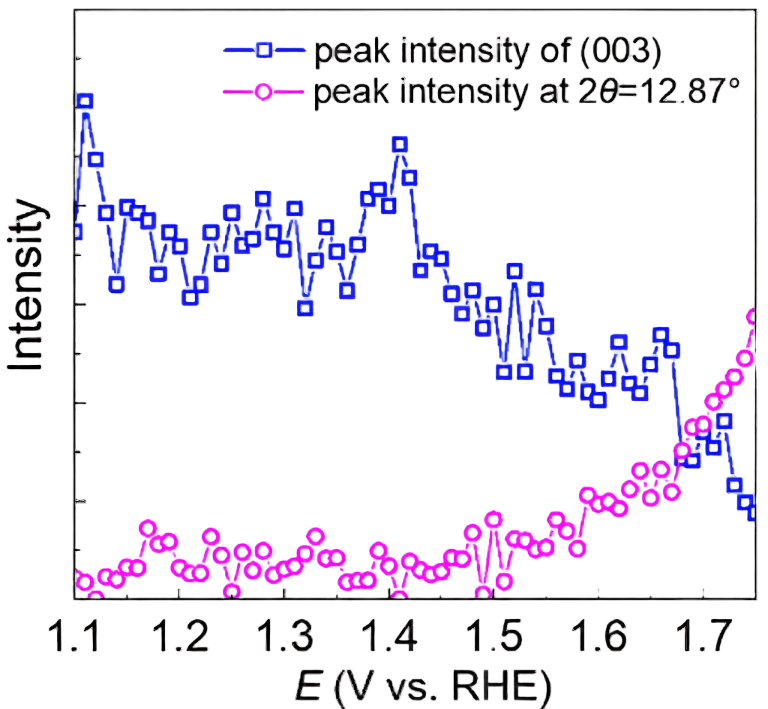
Reproduced from Chen, J. et al. J. Synchrotron Radiat. 2025, 32, 1272–1281. CC BY 4.0.
Capabilities Relevant to the EC-XRD1
- Simultaneous XRD acquisition and electrochemical control.
- Detection of potential-dependent crystalline phase transformations.
- Correlation of diffraction evolution with applied electrode potential.
Note: The cited publication used a custom-designed operando XRD electrochemical cell rather than the Beyond Battery EC-XRD1. The reference is included to demonstrate the relevant research methodology and should not be interpreted as describing or evaluating the EC-XRD1.



Reviews
There are no reviews yet.