
Description
Product Description
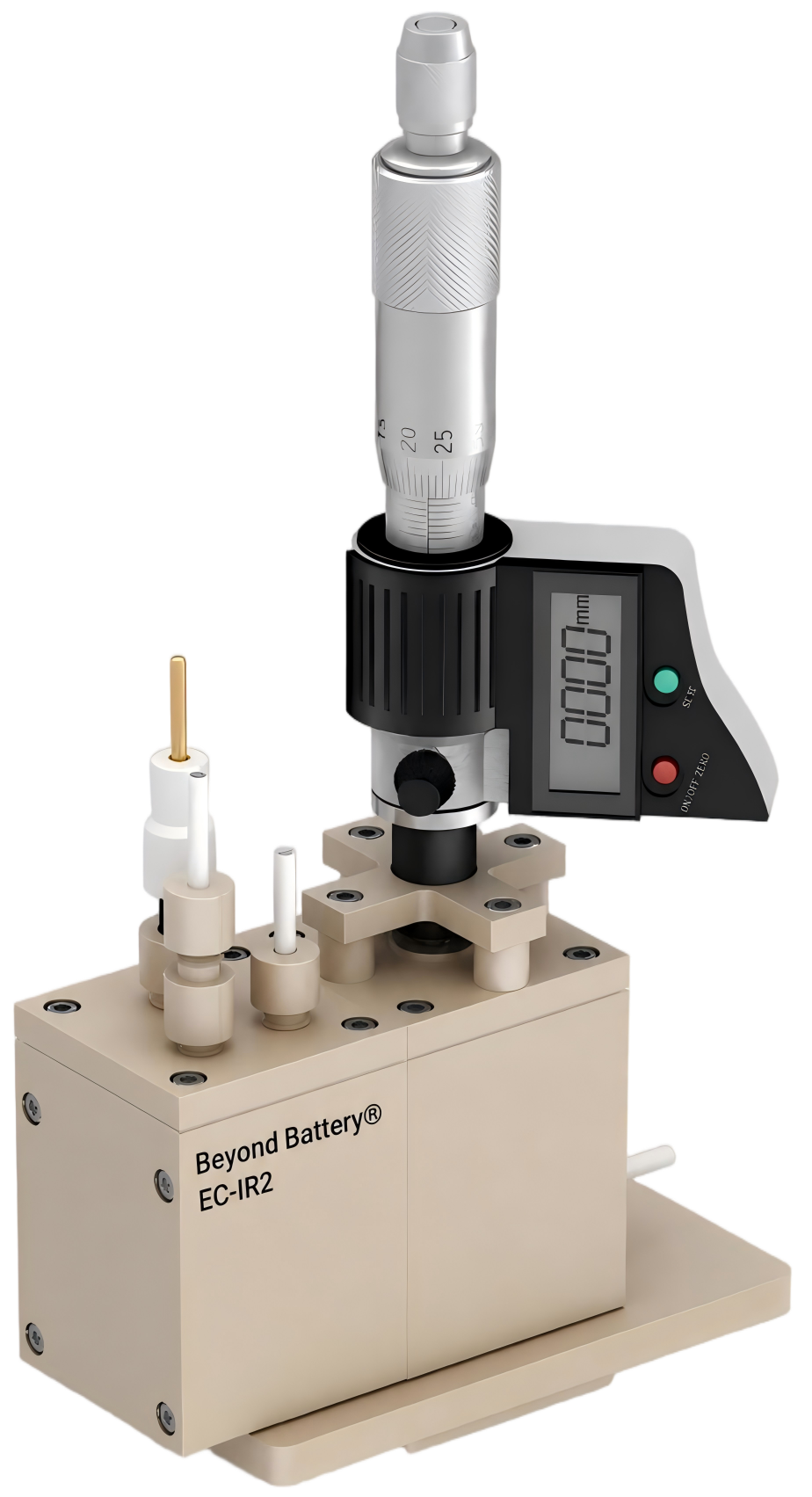
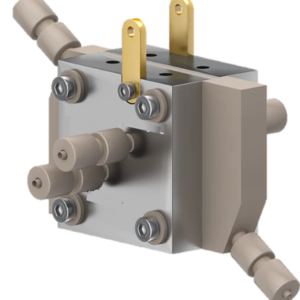
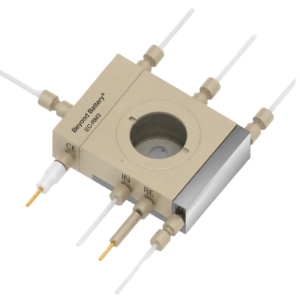
The EC-IR2 is an H-type, two-chamber in situ infrared spectroelectrochemical cell designed for external-reflection IRRAS measurements. Its micrometer-adjustable glassy carbon working electrode enables precise control of the electrode-to-optical-crystal distance, allowing adjustment of the thin electrolyte layer and reflected infrared signal. A replaceable membrane separates the two chambers, while independent gas inlet/outlet ports support gas introduction and purging during electrochemical measurements.
Key Features
- External-Reflection IRRAS: Enables in situ infrared analysis of electrode interfaces using a glassy carbon working electrode and reflected infrared signals.
- Micrometer-Adjustable Thin Layer: Allows precise adjustment of the working-electrode-to-optical-crystal distance to control electrolyte-layer thickness and reflected signal intensity.
- Membrane-Separated Two-Chamber Design: Separates the electrolyte chambers using a replaceable membrane, with independent gas inlet/outlet ports.
Technical Specifications
| Chamber structure | Two-chamber (H-type) |
| Electrode system | Three-electrode |
| Reflection configuration | External reflection (IRRAS) |
| Cell volume | < 20 mL |
| Working electrode | Ø10 mm glassy carbon |
| Electrode adjustment | Integrated micrometer |
| Counter electrode | Graphite electrode |
| Reference electrode | Ag/AgCl electrode |
| Optical window material | Ge, ZnSe, CaF₂, or Si |
| Cell body material | PEEK |
Working Principle
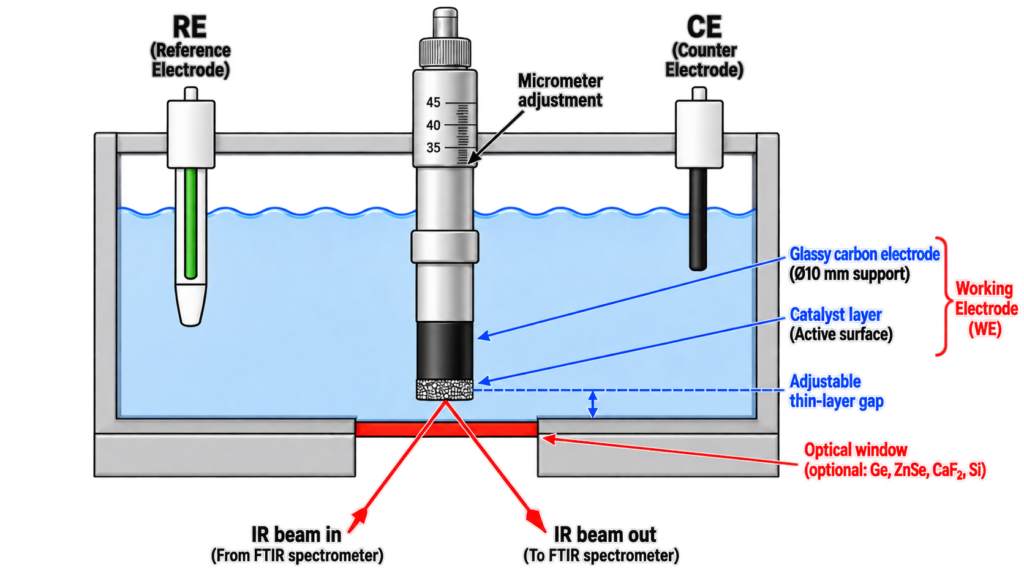
In the EC-IR2, an infrared beam passes through the optical crystal and a thin electrolyte layer before reflecting from the glassy carbon working-electrode surface. The reflected beam carries infrared spectral information from species at or near the electrode–electrolyte interface, enabling potential-dependent IRRAS measurements. The integrated micrometer adjusts the electrode-to-optical-crystal distance to control electrolyte-layer thickness and reflected signal intensity.
Measurement Configuration
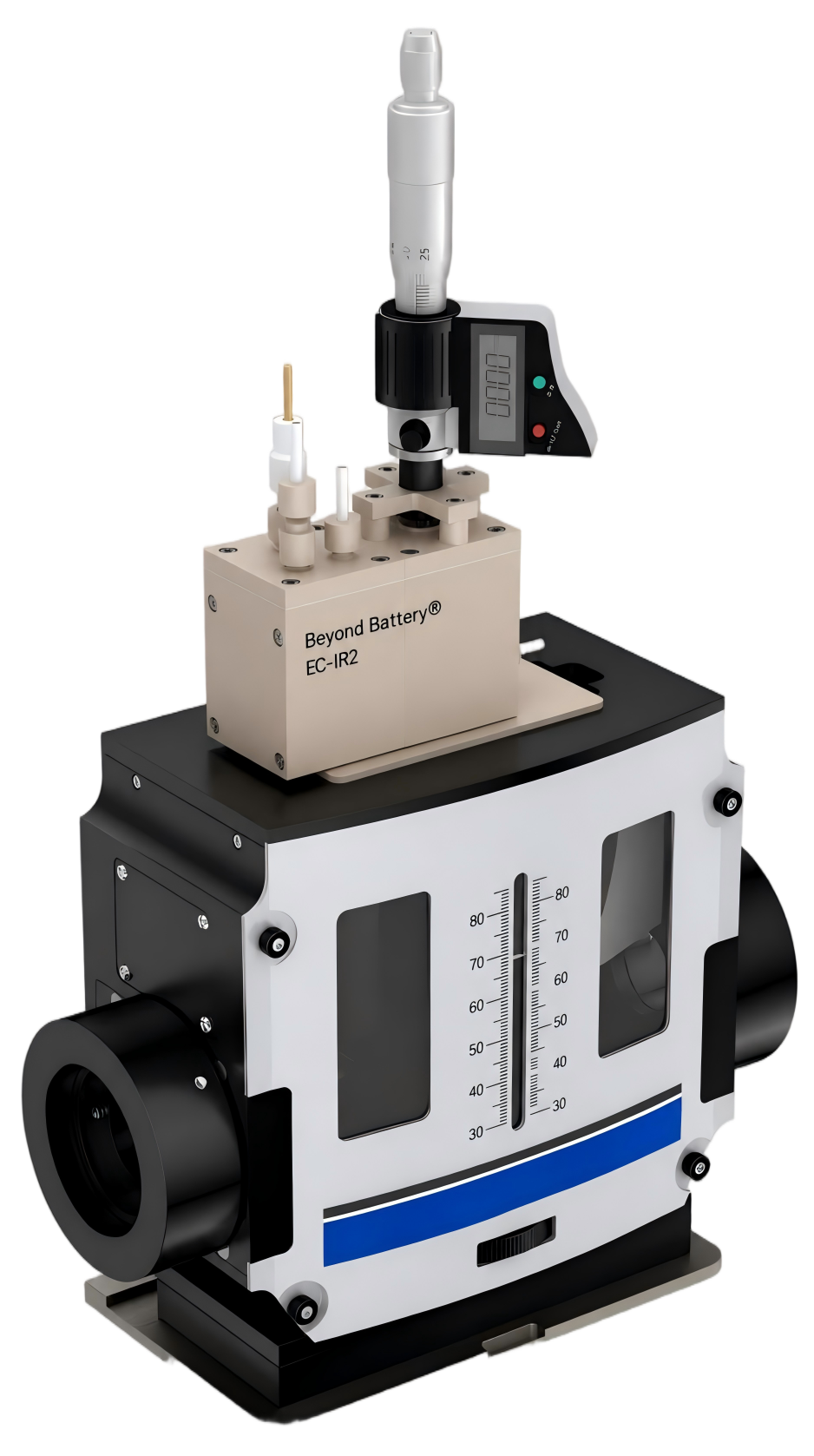
The EC-IR2 employs an external-reflection IRRAS configuration with a Ø10 mm glassy carbon working electrode and integrated micrometer adjustment. The electrode-to-optical-crystal distance can be precisely adjusted to control electrolyte-layer thickness and reflected signal intensity, making it suitable for catalyst-coated glassy carbon electrodes. The cell is designed for use with the PIKE Technologies VeeMAX III optical accessory (required; sold separately).
Application Studies
Additional application studies involving the EC-IR2 are currently underway.


Reviews
There are no reviews yet.