
Description
Product Overview
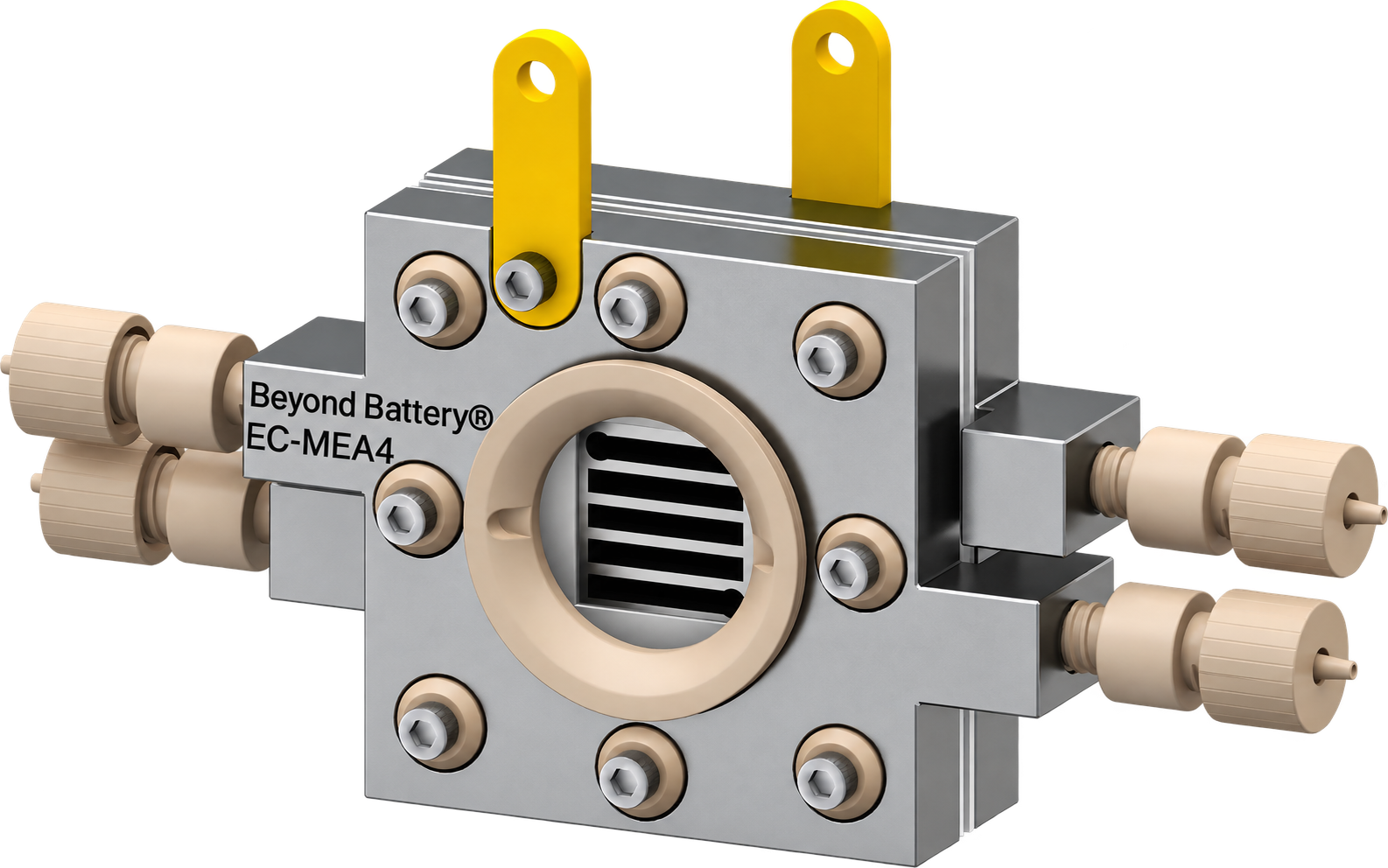
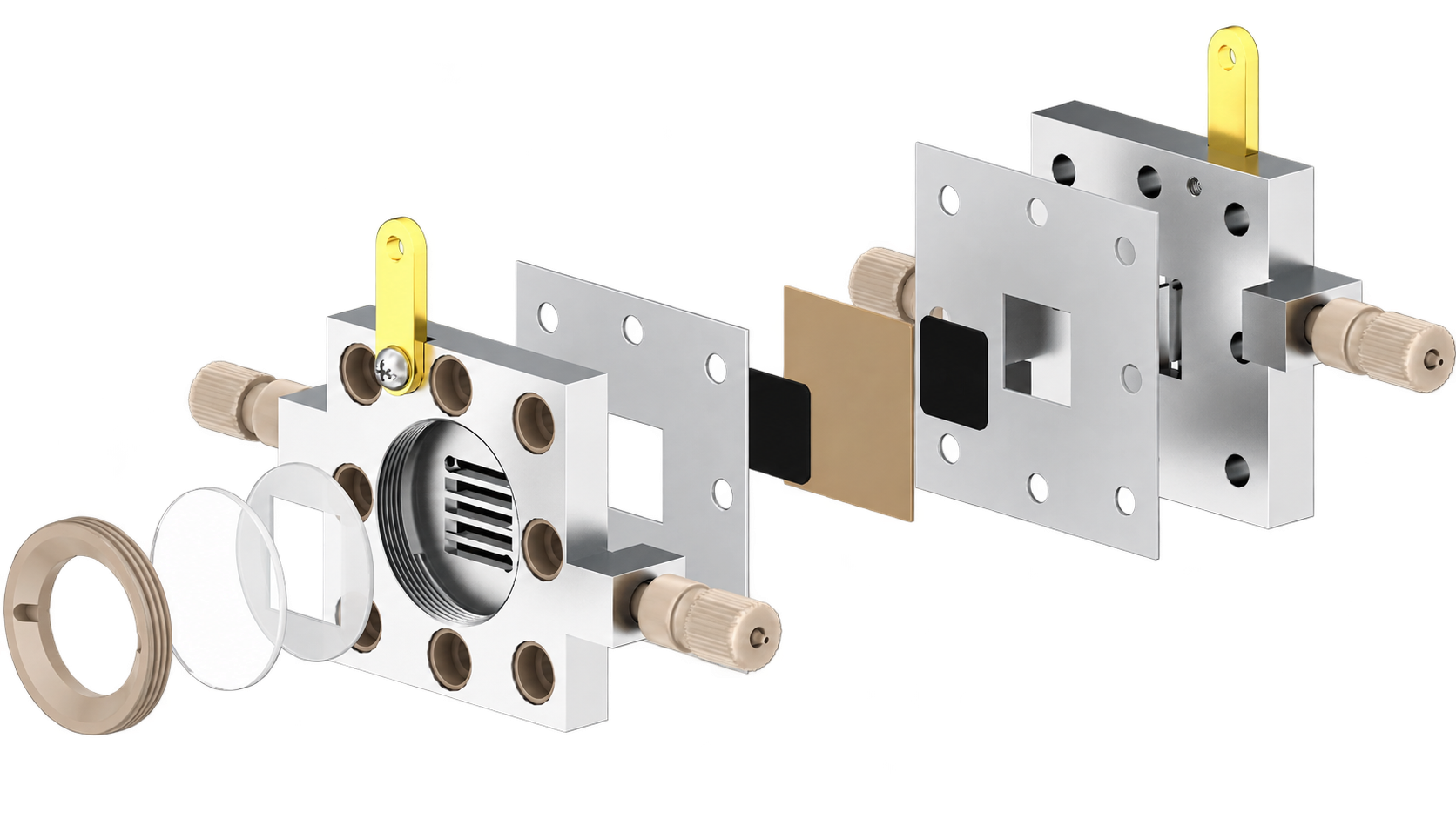
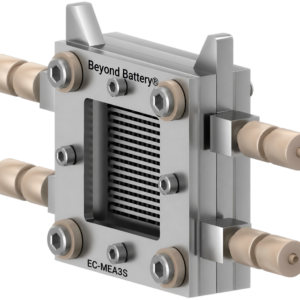
The EC-MEA4 integrates in situ Raman characterization with a two-electrode MEA electrolysis platform, enabling direct investigation of electrode-surface and interfacial processes under operating conditions. Its short-path optical access, configurable cell hardware, and shear-enhanced flow-channel design support stable electrolysis and flexible Raman-coupled studies. The platform is suitable for mechanistic investigation, catalyst and electrode evaluation, and gas-fed MEA electrolysis research.
Key Features
- In Situ Raman Optical Access: Quartz or sapphire optical windows with a window-to-sample distance of less than 5 mm provide direct optical access for Raman measurements.
- Shear-Enhanced Flow Channel: The flow-channel structure incorporates a shear-enhanced design to promote bubble removal and support stable reactant transport during MEA electrolysis.
- Configurable Cell Hardware: Ti, Ni, or PEEK flow-field plate options, gold-plated copper current-collector tabs, and PEEK quick-connect fittings support flexible electrochemical and fluidic configurations.
Technical Specifications
| Chamber structure | Two-chamber |
| Electrode system | Two-electrode |
| Anode / cathode | Sheet-type electrodes |
| Window-to-sample distance | < 5 mm |
| Optical window dimensions | Ø28 × H1 mm |
| Flow-field size | 14 × 14 mm; customizable |
| Flow-field configurations | Shear-enhanced channel structure |
| Flow-field plate material | Ti, Ni, PEEK optional |
| Optical window material | Quartz or sapphire |
| Fluid fittings | PEEK quick-connect, 1/8″ |
Instrument Compatibility
- Raman Spectrometer Compatibility: Compatible with most commercially available Raman spectroscopy systems, subject to instrument geometry, objective working distance, optical access, and dimensional fit. Please confirm compatibility before purchase.
- Potentiostat Compatibility: Compatible with most commercially available potentiostats and electrochemical workstations suitable for two-electrode MEA testing, subject to the required current and voltage range. Please confirm compatibility before purchase.
Typical Applications
- In Situ Raman Monitoring: Spectroscopic tracking of electrode-surface and interfacial changes during MEA electrolysis.
- CO₂ / CO Electrolysis: Gas-fed MEA studies with optical access under operating conditions.
- Interfacial Mechanism Studies: Identification of adsorbed intermediates and investigation of reaction pathways.
- Catalyst & Electrode Evaluation: Comparative evaluation of catalysts and electrodes under MEA operating conditions.
Related Published Application
Operando Raman Monitoring of CO Electrolysis in an MEA Electrolyzer: Li et al. investigated high-rate CO electrolysis in a home-made zero-gap alkaline MEA electrolyzer and employed a separate home-made MEA operando cell for Raman characterization under comparable reaction conditions. Using a 785 nm excitation laser and a long-focal-length objective, operando Raman measurements resolved atop- and bridge-adsorbed CO species on Cu catalysts and revealed changes in CO adsorption and surface coverage associated with grain-boundary density, providing direct spectroscopic insight into C–C coupling during CO electrolysis.
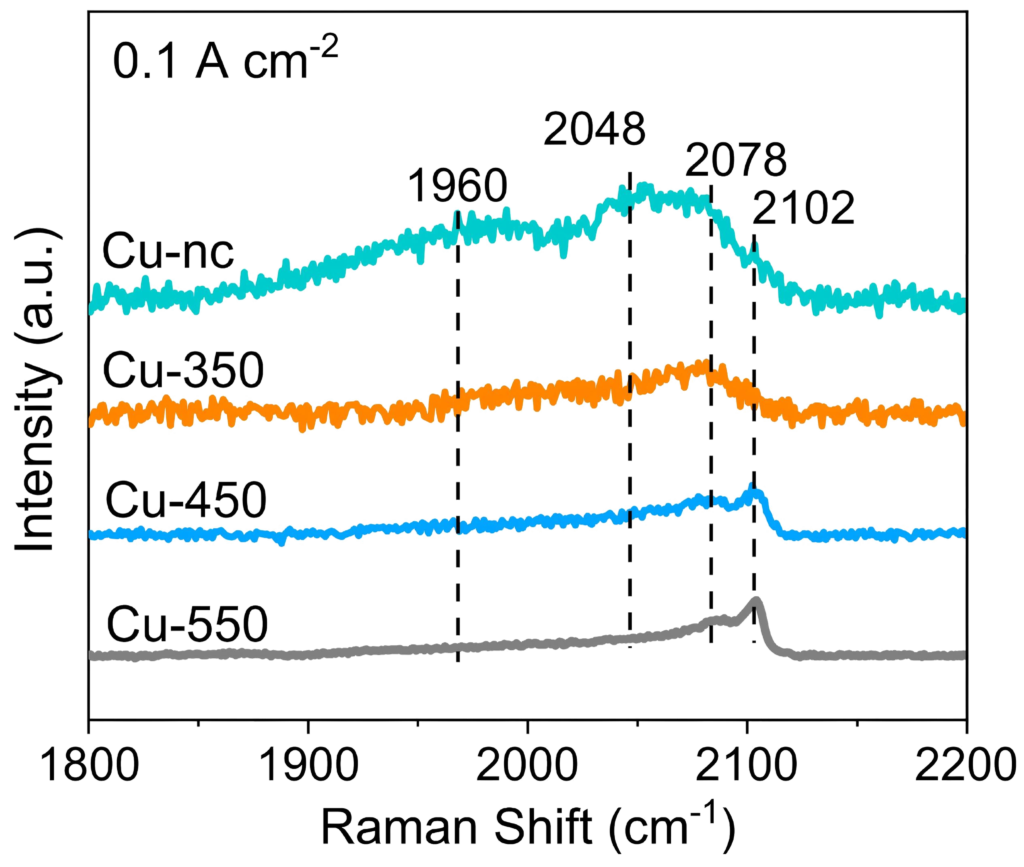
Reproduced from Li, H. et al. Nat. Commun. 2024, 15, 4603. CC BY 4.0.
Capabilities Relevant to the EC-MEA4
- Demonstrates operando Raman access to catalyst surfaces under MEA electrolysis conditions.
- Shows that adsorbed reaction intermediates can be spectroscopically monitored within an operating
MEA environment. - Illustrates Raman-coupled MEA electrolysis as a platform for mechanistic investigation.
Note: The cited publication used a custom-built operando Raman MEA cell, not the EC-MEA4. Its optical-access MEA configuration and operando Raman approach are structurally comparable to the EC-MEA4 and are included solely as a related application example.



Reviews
There are no reviews yet.